16 – BFCC Lite With Talking Pictures TV
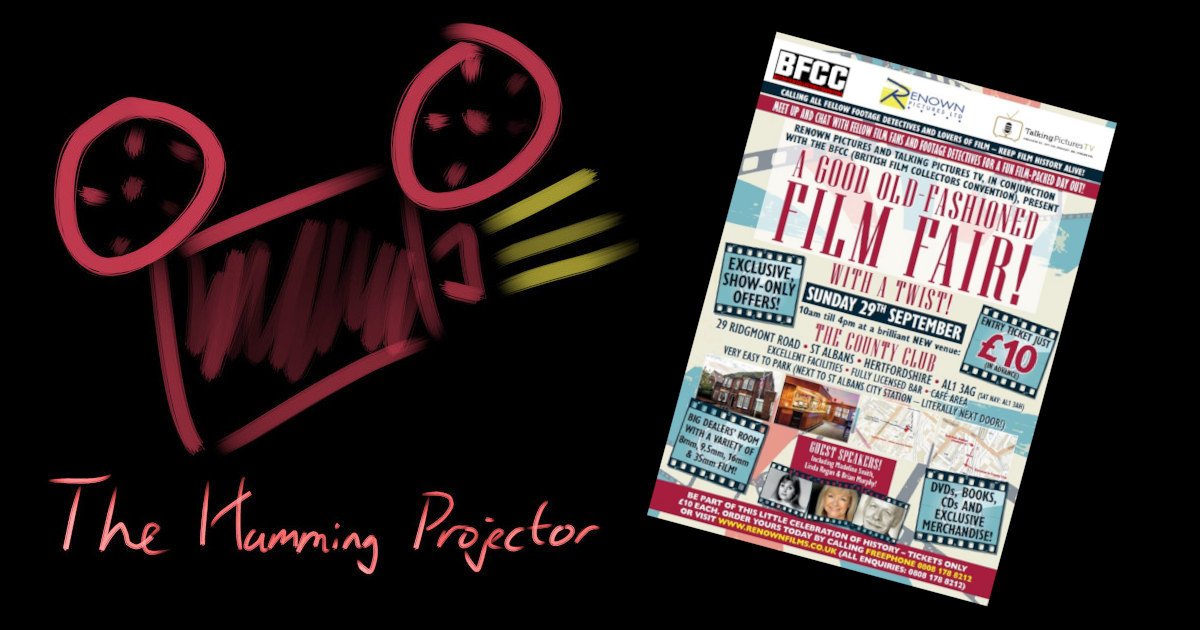
The British Film Collectors’ Convention is back! Together with Talking Pictures TV, they Present BFCC Lite the 29th of September in the UK. But how did a TV channel and a group of film collectors find each other? What makes a TV channel, which gathers millions of viewers each week, different from other TV channels, and why do they care about film? Listen to this week’s episode where we talk to John and Mark from BFCC and Sarah from Talking Pictures.
Some highlights of this episode
- We learn about Talking Pictures TV, a TV station with five million viewers each week
- Talking Pictures profile, and relationship to film.
- Black and white movies the other TV stations have forgotten with film as a source material on a daily basis
- Difficulties running a free TV station
- Talking Pictures’ Special relationship with the viewers. Talking to viewers at the Christmas time
- How did BFCC and Talking Pictures find each other for the BFCC Lite event? And why is it called Lite?
- The new place St Albans and the guests that are coming to the event
Links
In this episode
-
 Eivind Mork
Host
-
 John Clancy
Guest
-
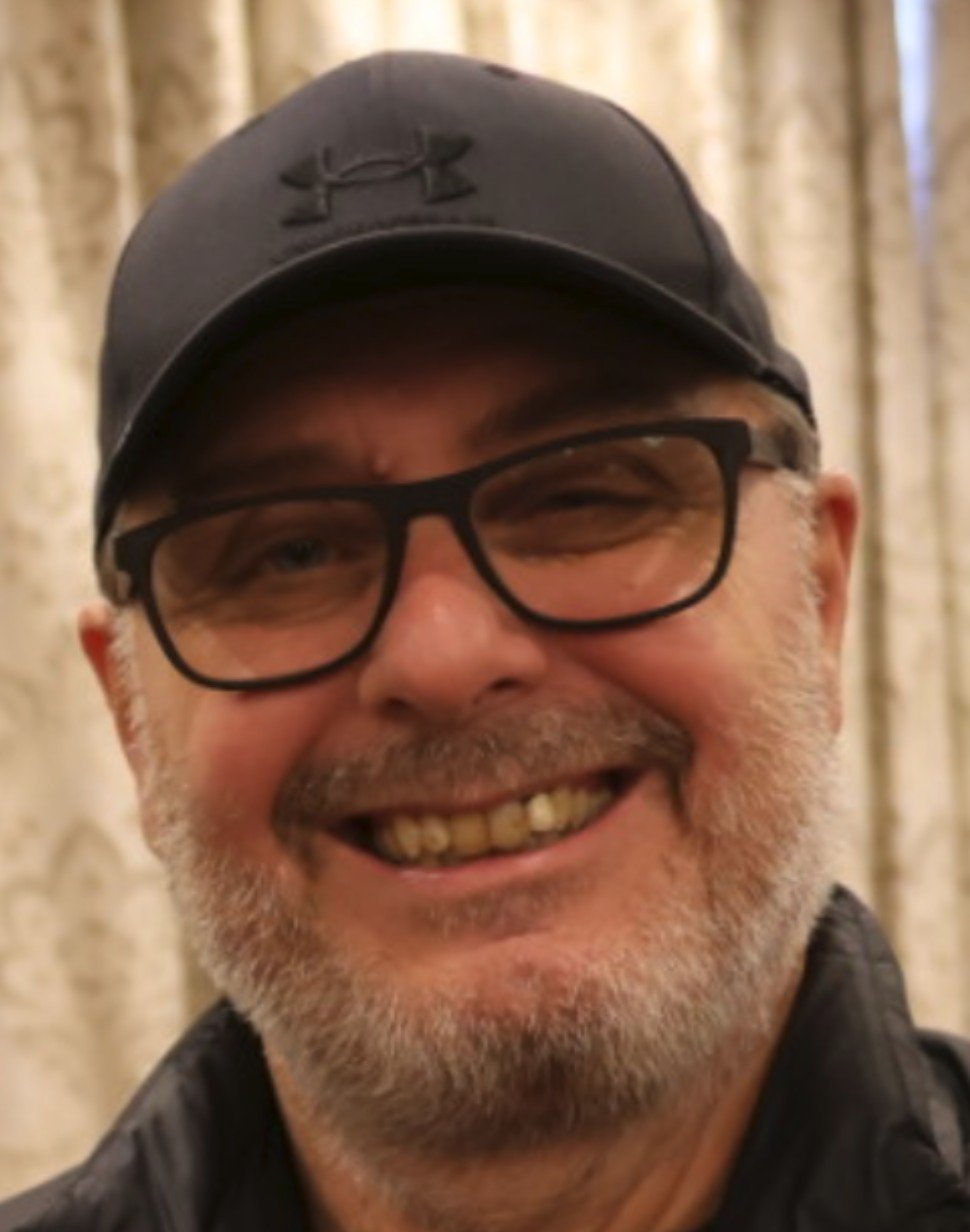 Mark Williams
Guest
- Sarah Cronin-Stanley Guest
Chapters
Transcript
What happens when you combine a traditional film collectors convention and a TV station? And how do two so seemingly different entities find each other? Welcome to another episode of the Humming Projector Podcast, where we will talk about the TV show. We will talk about BFCC Lite, a convention that will be held the 29th of September in the UK. Two of the guests today have been here before. Last year, in episode 3, we talked about BFCC, the British Film Collectors Convention, which returned after a few years hiatus. One of them is John Clancy. And welcome back to the podcast, John. It's very good to see you again. Thank you very much. Good to be here. And the second guest is Mark Williams, who also happened to be my guest in the previous episode, about his new book, Bootlace Cinema. He is the first guest to be in two subsequent episodes, who shows that he is a man of many talents. Welcome back to the podcast, Mark. Yeah, sorry, sorry, sorry, listeners. Not me again. Yeah, yeah. Always great to catch up with you. How are things going with the release of your new book? Excellent. Yeah, we started a mini book tour yesterday. So we had an event at a record shop in Worthing, which is on the South Coast. It was good. Yeah, I enjoyed it. You know, and I took the projector out. Well, I cheated. I took a video projector out and then showed some Digest, which I've uploaded and things. So it was good. Yeah, yeah. Sold a few books as well. So it's all good. All going very well. That sounds great. I loved your book, by the way. I know I also have the physical copy. Oh, thank you. Thank you. And we hit, I think it was number 2, you know, in the horror/sci-fi category last month as well. So it's good. And it went out. It goes up and down. It was up to number 14 a couple of weeks ago. So it's... That's fantastic. Yeah. You know, I'm absolutely chuffed to bits, really. You know, it's such a niche subject, really, isn't it? So, yeah. Very pleased. The next BFCC will be hosted together with Talking Pictures TV, a British TV station, and I'm delighted to welcome my third and final guest today, Sarah Cronin Stanley, co-founder of Talking Pictures TV and managing director of Renowned Pictures Limited. Welcome to the podcast, Sarah. Sarah Cronin Stanley: Thank you for having me. Nice to be here. We will get back to BFCC and talk more about this year's event, but as many of the listeners are not living in the UK, and I'm one of them, Sarah Cronin Stanley: And perhaps haven't even heard about this TV channel, I would love to learn a little bit more about Talking Pictures. Sarah Cronin Stanley: Sacrifice. Hasn't heard of Talking Pictures. I think you better cut that bit out. Sarah Cronin Stanley: My impression was, when I was in Blackpool, my impression was that everybody knew what it was, of course, and everybody talked about Talking Pictures, and I've never heard about it, so I thought, "What is this Talking Pictures?" I heard it in conversations all around the table, so I learned what it was, but now today I will hopefully learn a bit more about the TV channel. And it sounded fascinating, so I am very happy to learn more today. It might look strange to talk about a TV station in a podcast about film and film collection at first glance, but there are several reasons why I find this interesting as a film collector, and we will get back to that. As I mentioned, I heard people talk about this in Blackpool, so I realized this was a big thing in the UK. And I looked up some numbers before we started this recording, and I can see that about 4 million people tune in every month. I don't know if that number is still relevant, but it was a couple of years ago, I think. 5 million a week? A week! I just have to mention that my wife worked for the NRK, the Norwegian equivalent of the British Broadcasting, and we are 5.5 million people in Norway. So, I mean, 5 million a week is a very comparable number to the Norwegian Broadcasting. Impressive, to say the least. And you are 68 million in the UK, as far as I know. So that's that's very, very high numbers. I think it works out something like one in five of the over 65s watch Talking Pictures TV on a regular basis. Wow. It's quite astonishing. Yeah. I don't think we have perhaps the main channel of NRK has that kind of numbers, but I can't see any other channel that could even get close to that. So, what kind of a TV channel is this? And in which way does it differentiate from the other TV stations? So, Talking Pictures TV has been on the air for almost 10 years now. We're just approaching our 10th year. And it's run by me and my dad. My dad's 77, still works seven days a week with me. And he decided that his age group had been forgotten about and that there was nothing on terrestrial British TV that he wanted to watch anymore. He's not bothered about who's snogging who in a bikini and he wanted to champion film. We used to sell films. That was our background. We were distributors. So we own a large archive of British B-films, which I'm very proud to say. And we used to supply all the main big terrestrial channels, BBC, Channel 4, ITV with their afternoon black and white film, and then it all just stopped. And he said, "This is ridiculous. People still want to watch film. There's a massive appetite for it. There's a massive appetite for black and white. Why is it all being abandoned? All the TV series for the over 65 age group as well were kind of being forgotten about." And so we went everywhere. We went round all the major terrestrial channels, a lot of sky channels, the satellite, one of the biggest satellite providers over here. And so, look, we've got this idea. We want to launch a channel that plays predominantly black and white, but there'll be other things as well than sort of TV series that have long been forgotten. And everybody tells us we're bonkers. Don't do it. Nobody wants to watch black and white telly. Nobody's interested in black and white films. You're barking up the wrong tree. You're 30 years too late. And I'm pleased to say, almost 10 years later, and an audience of, as we said, 5 million a week, They were wrong. So out of that, it's not just about bringing films to the screen. You know, we don't play Gone With The Wind. There's no point. Everybody's seen it. But what we do play is a very rare black and white British bee that was made on the South Coast in 1952 that no one's ever heard of, but it's probably got some of the biggest names of British film in their early roles. So we do play them. We play lovely little shorts in between the films. They've been a great treasure trove for us, and we've got them at BFCC conventions before. I should state that we have to go and get the official licenses and copyrights in place before we play them, obviously. We don't just whack it on a press play and hope for the best. So yes, we play shorts in between and series as well. We're very fortunate we own the Southern television drama archive, apart from Wurzel. And so we've managed to dip into that as well. And then we started licensing from other big libraries. And when we first went to them, you know, we were going to big archives and a lot of the British films don't forget are owned by American archives now. So we were going to them with a wish list and they didn't even know they own these films. So it was quite a long research process. You know, a lot of the deals that we're doing now have taken us years and years. For example, something like a British institution of tea time telly would be Zed Cars. I mean, everybody used to watch Zed Cars, knows the theme tune. And that's taken us about 10 years to open the doors of the BBC archive to get some of the episodes out. So it's a really long process. But out of that has been a lot of fun as well, because we started producing our own content. So we have a Friday night at 9 o'clock Horror Double Bill, which is led by the fabulous, gorgeous screen queen Caroline Munro, who I adore. And then we started this project based on Dad's - I'd love to show you this, but it's like full of - I don't know - I think I've got about 4,000 cans of film in this one tiny office, we can't really open the door. No, no, no! We need to see it! And then Dad's got his steam back there that he views stuff on as well. Knowing your dad half of it, it's probably nitrate sound. Yeah, yeah, he's got quite a bit of nitrate in here, yeah.
You better pull that fag out.
So we then came and produced our own show called The Footage Detectives, which became a bit of a national sensation. So the idea, it's Sundays at five o'clock, the idea is it's Noel, my dad, and Mike Reed, who's a big, well-known broadcaster, who also has a massive, although he's known for radio, he's got a massive passion for preserving film. And so they do this show at five o'clock. It's filmed in my sister's old bedroom. And they find bits of film, talk about bits of film, viewers send film in and say, "Do you know where this is?" And they run Super 8, 9.5, you name it, we've played it. They have a little chat about nostalgia and memories. But it's just been an overnight sensation. I cannot tell you. It's now got an audience of, last weekend, 188,000 viewers tune in every Sunday at 5:00 and half watch the repeat again six weeks later. And that is all about digging out old bits of film. So really, you know, us and the BFCC are kind of the same but different. You know, we have got a lot of synergy. I can't throw film away. I've never ever thrown a piece of film away, even if it is a very old mouldy bit of nitrate or a Super 8 that's, you know, probably never going to be watched ever. That's kind of why I've got this film archive collection sitting here. That really needs to be sorted out. Yeah, that's us. That's Talking Pitch TV. It's all free as well. And we do a free online catch-up service, which you might want to look at, actually, because some of the content, like the footage detectives, can be watched abroad for free. Yeah, I try to look up that. So, I find some of those clips, because, I guess, because of rights, most of what you're providing is only available in the UK, right? Yeah. Yeah, that makes sense. But sad, though, for me living in Norway. I know, I know. One day, one day I'll go global. Yeah. Get yourself a VPN. Yeah, I know, I know. There are ways to to get a UK IP address, but for regular watching, that will be harder. And that's incredible. And so it's like, what do you, what you're providing there is actually, you could take any, any film show at any convention and that sounds like what, what, what you can find on the TV. Yeah, yeah, yeah. More or less, like shorts and, and it's much of the same films. It's like a visit to the movies or a proper film show every evening, isn't it, Sarah? And between the shows, you get a still of an auditorium and a cinema, then you get the down, down on screen. And this all started off, I explained to Elvin a couple of days ago about Renown, where you started off with DVDs, didn't you? And they were, they were quite legendary, weren't they? Because you're bringing a lot of these British B-movies out, nobody hasn't seen for years. Good titles like Merton Park Studio Productions and things, weren't they? Scrooge is my proudest. And it's getting harder and harder to, to find any way to watch those old movies. If you go to Netflix or any of the streaming services, you, you hardly find any black and white movies. That will change, about my word. That was public domain, wasn't it? Scrooge, I think. George Minter. We bought it from the George Minter archive. Oh, because there was a scandal back in the Super 8 day. They released, I think DCR had the UK rights to release Scrooge. We did a 400 foot and a feature version. And then Columbia, actually in the USA, released their 400 foot. So they were sort of, there was a big hoo-ha and they banned any imports. But I mean, people still imported them, you know, there's nothing to stop you getting the copy but it was quite scandalous at the time. And half the battle trying to find out who owns the copyright. It's so tough, you know, trying to trace that trail. And the thing is, a lot of the time, some of the big archives will not have brought the whole collection from that producer. They'll only have brought a certain number, so then you're back to square one trying to find out who they're. But of course, the nightmare thing is, we've done all the hard work and now there's other people that are riding our waves, shall we say, to put it nicely. Which is frustrating, you know, when you've worked so hard for 10 years, to have people come along and knit your idea. But, you know, what can you do? What can you do? And one question I think I know the answer to, but I'll ask it anyway. Why did you choose to make a TV station and not provide a streaming service of the same content as you have a large archive? Because my audience aren't into streaming yet. Exactly. My target audience. I expected you to say that, yeah. I mean, they are getting there. I mean, when we launched our online catch-up service, I've been absolutely over the moon at the numbers. And I didn't think anybody would use that service or watch it or, you know, the fact that you have to press the red button on your remote to connect to the screen, to, you know, I just thought it was way too. I mean, I get calls every day for, can I, can I, have I got this on VHS? And can I help them with their Sky remote? Because they don't know which button to press record, you know, things like that. So streaming, I think for the majority of my audience, is a little bridge too far. But it will come, you know, and I've got to be ready for it. And I don't think it's that far away. It looks like we will launch, we will launch our first app before the end of the year. Right. Brilliant. That's good, isn't it? Yeah, they'll soon get the hang of it, I think. If you make it easy for them, then... Yeah, I'll put you on viewer customer services. Thanks, Mark. Yeah, that's good. Yeah. Okay. And after being, I've collected films for 10-15 years, something like that. And I've realised there are a lot of characters in this hobby. And I guess you, how should I put it, your audience is probably a little bit different than the audience of the BBC, perhaps. Would you say that your audience is perhaps more colourful? If you come, so we do a lot of live events as well, which are community-based. And most of them have audiences of about 1500 people each event. Between 500 and 750 people are our smaller ones. And I would say the mix of those that support us and come to almost every event around the country, no matter where they live, or where the event is, you do see the same faces. And yeah, there are a lot of colourful characters. Are they the Talking Pictures groupies that we're talking about there, are we? It means a lot, you know. But that is the nice thing about Talking Pictures. It's got like a community feel. Like when we launched, we didn't want it to be any kind of big commercial, expanding, never-ending channel. You know, it was a service, almost like, you know, a public service without the public service funding.
You know, that's what it was. It was a community feel. We're all on this journey together and we get suggestions. I mean, our postbag is two, three thousand letters every other day of people suggesting films they'd like to see, or series, or why can't we play, or have we thought of, or posting in a VHS and telling us to play it on Tuesday at two o'clock. Or, you know, or reels of film. I mean, we have been inundated with people that don't want their collections to just go to landfill, you know, for them sending in boxes and boxes and boxes of film. Which is lovely, that they feel like we're a good home, you know? I love that. It's important. Let's circle a little bit back to films. You have a large collection of films, but they are mostly shown on TV, right? So, do you take some films from the collection and show them on projectors at any of the events? Or how is the TV station's relationship to the actual film celluloid, except for as a source material? Is there any... So, well, I would say that we're one of the only channels that does still use film as their source material. I mean, I can't think of another channel where it's not just file-based straight away from day one. You know, we still on a daily basis work with 60mm and 35mm. I don't think there's any other TV stations in the world like that. And that's good, because we get to see the film through the whole process, through, you know, from it arriving, cleaning, transfer, cleaning again, and again, and again, and again, trying to do a bit of deep sparkle and whatever. We do work with files as well. I mean, a lot of the big Americans that we buy from archives obviously don't want to lend us their cans of film. You know, they want to provide us with a file. But yeah, it's a very hands-on TV station with film, I would say. I honestly don't think there's any other channel like that. No, and perhaps many of the 16mm films that you get, I guess at least half of my 16mm collection has originated from TV stations because that was the way they were distributed, wasn't it, back in the day? So now they actually circle back to... I bet you've got loads of the stuff I'm looking for. I mean, that was the biggest problem, you know, in TV stand. Dan worked in telly as well, you know, I mean, he was an editor for years. They didn't look after it. You know, it went out and it went on the floor or it was reused or just never... I mean, it's criminal, really. And I'm hoping we've learnt from that in some way, shape or form. And you can find so many very small subjects. Like I have, for instance, I have an instructional film for interpreting weather maps for pilots during World War II, for instance. I mean, how can you find that in any other way than on film? Well, I think you should get that broadcast, Sarah. Yeah, I love it, love it. One of my proudest moments is I found a Sid James short about budgerigars. So it's not Sid being Sid, it's Sid telling you how to look after your budgerigar. And I've never seen an audience laugh so much when I played it. I played it one of our events as well. And I've just found... Sid James is always good with birds. Sid James is always good with birds. He certainly was, yeah. I've just found an Anthony Newley short that's been lost, an episode from a series, Foreign Legion, cracking series. I mean, you know, it had big audience numbers, and yet I found one episode, the rest of it, you know, nobody knows where it is. It's so sad. It's terrible, isn't it? Yeah, yeah. I mean, the BBC's actually driven. I mean, they were using back in the, you know, back in the late 70s. They were just erasing, they had these big, I don't know, 10-inch tapes or whatever. They were just erasing them to put, you know, put new programming on. It's just crazy, isn't it? It's all the, a lot of the Top of the Pops episodes are missing and things, you know, so terrible. You know, very sort of penny-pinching way to go about things, really, you know? They were even slinging the 16mm masters into skips. So, it was only because a lot of the people who worked at the BFC, at the BBC, were film collectors, that these things have actually been returned. Yeah. I'll tell you, one of my gems, I won't mention the title here on the podcast, but one of my gems was saved by a person, now deceased, but that I knew, that worked, driving a garbage truck. And his colleagues knew about his hobby. And one day, a person came to him and said, "You know, there's a film library that we're going to collect to send it to the trash. Do you want that job?" And he said, "Of course." And he took the truck, emptied the entire load, went to the Film Archive, and they said, "Oh, you're here too early. We're supposed to chop it up with an axe first." And he said, "No need, because we'll crush it into the garbage truck here." So with several tons there, no need for that. And he loaded it carefully, filled his whole truck of it, got back to his house, pushed the entire load into his garage. And this major hole, you can find films from that hole all over the world today. And I can't imagine how many titles were saved that way. Good man! I mean, back in the day, that would be looked at as criminal. But today, it's like everybody's happy that they were saved. Of course, Elvin, during the COVID years, you see a lot of people were dying, you know, not only from COVID, but other things that they were doing to people. And this meant collectors were going to the grave and no provision had been made for the film collectors. And John Franklin, in particular, was getting involved in this. And so there's a lot of films that have gone into the landfill. And that's it, they've gone. Nothing we can do, it's gone. And it turned out, through speaking to all the National Archives about this very problem, apart from Talking Pictures and some other people around the world, really, who are doing a few bits here and there. There was no one actually offering any sort of service to save people's film collections and keep them on the market. So hopefully, hopefully now, there is a national service. We'll get on to that later. Still in the early stages, but that's an offshoot. It came out because of the BFCC last year. And it's fascinating, though, that in the community where I am in Norway, many collect film because they want something different. than what's on TV. And ironically, now, I see that this TV station is probably one of the best ways to raise awareness about every day, every regular man in the street about this treasure that's out there. So, perhaps, in a way, the TV can be a huge contributor to the film collecting hobby as well. That's, for me, that's quite fascinating. So, what would you say is the most important thing you have learned after creating this TV channel? Did you get any surprises from what you expected? I haven't slept much in 10 years. Don't do it would be my advice to anyone thinking of doing something similar. It's a rock and roll rollercoaster because, financially, you have no idea what we have to find to keep it going. And because we're free-to-air, we're advertising funded, that's it. You know, that's why I do all the events and calendars and DVDs and books and whatever, whatever I can think of, you know, because advertising revenue for terrestrial telly is on its bottom. You know, it's really, it's probably at the low, I think that today's report in all the trade industry magazines said something like it's down by 60% or something ridiculous. I mean, it's just like peddling in treacle. Is that down on 60% from last year, though, Sarah? Or is it from several years ago? It'll be from last year, yeah. It's massively down, massively down. And the bills, obviously, in the current crisis are all going up. So it is a rocky time. And that's why I'm saying, you know, the app and things like that, you know, is something that got to happen, because the the actual terrestrial platforms are just getting too expensive. And one thing Dad and I were passionate about from day one was that we wanted to be free, you know, because there are a lot of people that want to watch us that just couldn't afford any kind of subscription. And, you know, with the current announcements on the over 65s losing their winter fuel payments, and, you know, I just think, thank God. I mean, it's very, very humbling to be answering these phones Christmas time and in the winter. I mean, COVID itself was just horrific because if it taught me anything, it was how many lonely people there are out there that didn't have anybody to ring but me and Dad and to have a chat about what they just watched and what a lifeline talking pictures was for them. And yeah, Christmas time is quite tough. You know, I mean, we answer the phone all day long. Christmas Day, Boxing Day, Christmas Eve, Christmas Eve night, Christmas Day night because, you know, if we didn't, everybody goes, "You're mad!" But if we didn't, I don't think some of these people would ever speak to anybody. Terrible, isn't it? It's tough. It's really tough. And I am really worried about how the older people in the UK are going to be affected. I mean, these are all thank you cards and stuff. I don't know if you can see this, but there's just thousands around the office of people telling me how Talking Pictures has changed their life. I mean, how many people send a Christmas card as well or a thank you card to a TV channel? Do you know what I mean? It's crazy, isn't it? I love it. I just love it. It makes it all worthwhile. Yeah. And it's obvious to me that this is more than a job to you, from what you say. Yeah, yeah. It's a passion. It's not a very corporate money-making thing, I assure you. If you had started this TV channel today, would you have done this differently than you did when you started it? Well, we weren't broadcasters. You know, Dad and I were both in telly or in showbiz, as glam as it is. But we weren't broadcasters. I mean, we were always the other side of the camera and everything. It was a massive learning curve, learning everything that you had to do from start to finish. And all the tape around what you can broadcast. I mean, that's a whole other podcast. But it's very difficult, you know, making sure you're complying to every single legal beagle as well, at the same time as trying to keep it going as a business. You know, it's tough, really tough. Would I have done anything different? Yeah, probably.
I'm not going to tell you what, then. No, that's fair. Do you have to have two different versions, like one for the afternoon broadcast? That's like a carry-on type film or something, a little bit rude or something, and then you have a different version for the evening or something? Probably that Dick Henry film, 'Oh, You Are Awful', I know that got... Yeah, well you can't show boobs. You can't show boobs, glorified boobs. You can show boobs if it's art, but you can't show glorified boobs. No, you'd have to cut those out for date. Jesus, Mark, I'd be inundated with... I can imagine he would be, yeah. Heart attack tips, let me know. Well, when you broadcast the Texas Chainsaw Massacre that afternoon, you had to cut it, but when you showed it after nine o'clock the same day, it was uncut, it was great. That is a prime example of a film that I would never play. Ah. Ever. Oh, well, we'll have to settle on Cannibal Holocaust then. There's all those Umberto lenses, isn't there? I want to say the afternoon version, though. That would be about 12 minutes long, and that's the titles. Yeah, there are a lot of... and some of them are ridiculous. I've got... some of them are just like, you know... and then I get complaints because I've put a board up to tell people that some of you may possibly might be offended. It doesn't matter, watch it anyway or not, you know. But that's, as I said, that's a whole other podcast because that would take me forever to explain why I have to cut certain words at certain times and why I don't. But I mean, the annoying thing is we don't have kids watching us, you know. I mean, I had a complaint. What was the complaint I had the other week? So we do Saturday morning pictures. Every Saturday on the channel, 9 till 12, we recreate that kind of, you know, Flash Gordon and we've got Batman now and Captain Scarlet and we do the older ones as well. So we do like Phantom Creeps and the Phantom Empire, you know, real cliffhanger ones. And we did have a load of films from the BFI for Children's Film Foundation as well, but they just don't, they can't find a lot of them, which is very annoying. Anyway, in between these films and series, there was one advert, and I think it was for a headache tablet or something really grown up, but not, you know, it wasn't a sex toy. You know, it was something grown up, but not, you know. Oh my God, this guy phoned up, he was fuming. Children are going to be watching this. I can tell you now, the children that are watching this are 77 plus. They were all watching the same kids when it was on at the cinema. There's not a chance you will get a 12 or 13 year old watching a black and white serial from the 1930s on Flash Gordon. I'd love to think you would, but they just won't watch it. And he was convinced that this 9-12 Saturday morning pictures was being watched by kids. And I was like, mate, I wish it was, but I sure did not. All the kids watch Flesh Gordon now, don't they? Well, yeah, that's like a PG now, though, isn't it really? It's just so tame, I think, isn't it? It caused a scandal at the time, didn't it? It's amazing. Actually, Sarah, you mentioned having to put a warning on front of things. I had to look at the, I did a review of the 4K of Highlander recently. And before Highlander, they've got a caption saying, "This represents historical views that some may find offensive." So I stopped the disc, took it out through it across the room and said, "Who the hell is going to find anything at Highlander offensive?" It's just incredible! But there it was! I think I found Christopher Lambert's Scottish accent very offensive, actually. It was a great film, though, you know. Circling back to the BFCC Lite, we covered BFCC and its history in Episode 3, as I mentioned. But I was fascinated about this combined event that you are now planning. So, how did you two, BFCC and Talking Pictures, find each other for this event? Sarah's idea, so she can fill us in. I love it! I love it. Yeah, it's all her fault. You're sitting back now. Well, basically, we've supported the BFCC forever. I mean, we had stalls there, you know. We've had stalls. Oh, donkey. Wasn't it Ealing where we used to go? Is it Ealing guys, the BFCC? Yeah, Ealing, yeah. I mean, Dad's been – I think he will be in a push chair to sell films. I mean, that's how long ago we've been going to these conventions. And then I sat here the other – a few months back and I thought, "I haven't had an email about a BFCC convention." I thought, "Well, this is strange. Why are we not – why are we not?" And then I phoned the 9.5 Club up and I said, "Guys, I haven't had an email about do we want to see it?" And he said, "No, we're not doing conventions anymore." And then I spoke to Mark about the BFCC and he said, "No." He said, "We've got nothing planned. You know, we're trying to get something off the ground, but there's nothing out." And I was like, "Well, this is crazy. You know, we should do something." Whose silly idea was that? Well volunteered, eh? Yeah, great, great idea, Sarah. Get out there, find us a venue, sort it out, and we'll ride on the co-tails and take all the credit. So, 10,000 emails about trestle tables later. Here we are. And, you know, we thought we'd do it a little bit different. We haven't advertised it on the channel because I'm very aware that we're kind of targeting two different people. We're targeting the film collectors who want to come and have a rummage and get a real REL bargain. And then we've got the DVD lot that want to come and get a DVD bargain. And then we've got those that just want to come and have a cup of tea in a roll and meet Brian Murphy, Lynch Reagan and Madeleine Smith and have a good day out. You know, it's a real cross-section. So we did pre-sale tickets so we know we've got enough bums on seats to cover our costs. But I am hoping that lots more film collectors will come and try because, you know, we're taking thousands of reels and there's lots of stalls as well that, you know, will have unusual collection items and things like that. So, I'm excited. I'm really excited. I think it's so nice to be in touch with collectors. I think it's important. And the BFCC Lite name. I think we ought to explain the BFCC Lite name. Now, this is something Keith Wilton and I have been talking about for years because, I think we probably discussed it on the last podcast, that film collector conventions have been on the way out for a long time. Mark Miller: And having been at the cliff face of this, I know about it only too well. So, when we were effectively put out a business in Ealing, it's, well, we decided to take a break and I was thinking maybe three years. By the time that three years was up, of course, we had the COVID-19 pandemic and Keith wasn't particularly well. And he'd always been, he'd been organising it as the main organiser by himself since 1981, I think. Wow. And so it was important to get him back for a sort of a resurrection of the BFCC at Chorleywood last year. That was supposed to be a first one just to see if it would still be possible to run something. But the Chorleywood venue, which surprisingly didn't turn out to be big enough because more people came in than any of us thought. And so we had to make the best of it. And in fact, we put Sarah and Ed in the main room where we were having the cinema. That was not expected, but that was our fullback position. That was our fullback position. And we had about, what, six dealers in there, Mark, in the end, didn't we? Yeah, it was just incredible. It was great. Everybody met up again. It's such a long time with COVID and things. And everybody's met up, you know. And Keith was there as the maitre d' if that's the right name, as usual. But he wasn't well and he's even worse today. I haven't seen him since, but I've kept in touch through Robin Maynard, who goes to see him every other week. So I know what's going on. But anyway, we've got a few things sorted out for that Chorley Wood one. And the important thing is that we found the screen here and there in Keith's place. And it was actually saved, really. So that's now here. So we've got the big screen. And that's fundamental to a full-blown BFCC, because that's what people expect when they come along to BFCC. It's bigger and it's better than anywhere else in terms of putting films on the screen for just the one-day Film Fair, Collectors' Fair. So we've got the screen, and we've really just got to find a better venue. I mean, Chorley Wood was OK. It was a good way to come back. But we couldn't really go back there this year, because it would not be as successful again. Which, I mean, the margins. How do you cover your copy? It's very difficult to park there. I think that's one thing. Yeah, that's one of the... Yeah, that was one of the... Yeah, it's got that slope. And a lot of our attendees, you know, you mentioned a slope. Yeah, it would be all right if it was snowing and they had skis. But there is actually another car park just up the back by the railway station. And there's all sorts of things you can do there, but it's problematic. So, ideally, we want to find a better venue. So, Sarah suggested she find somewhere. And she found this Oh, what's it called? The County Club. The County Club, yes. It's St. Albans County Club. And it's right next door to the railway station, isn't it, Sarah? Perfect. Perfect, perfect, yeah, literally. Loads of free parking for Sunday. He's got his own car park, got a lovely license bar. Somebody can have a bottle of ginger beer. Don't tell Mark there's a license bar. Don't be the last we see of him all day. I'll be signing books on the counter, on the bar. It's got lovely little decking bits. I'm hoping the weather might be nice because people could sit outside for a bit then as well. It's got a little stage bit. It's got a huge dealer's room. I mean massive. And it's run by a really nice chap and his daughter, which resonates with me. Right. But it's not, this is why the BFCC Lite name was used though, because what Keith and I have been discussing for years was maybe doing a smaller event where dealers, we just got dealers in and maybe we had a little screening room, perhaps. And so, that's effectively what we're doing here. Yeah, this is what we, you know, what we tried to do with Keith, wasn't it? When, I think the fateful one where we tried to organise one at Eerlin again at the school. And then we found out a couple of weeks before there was a marathon on that day, Eerlin marathon that day. So, no one would have been able to get to the school. No, that was a showstopper. So, unless the dealers came up or the public they wouldn't be able to get in after, you know, 8am, they wouldn't be able to get up to that particular road. So, it was a bit of a, it was a shame, you know, because obviously I worked a bit, you know, we keep on that one quite a bit, you know, but lots of calls, wasn't there, and trying to get it off. But surely we're just, it was staggeringly successful, wasn't it? I think. It was, yeah. I couldn't believe, you know, you don't see queues these days, do you? They were queuing around the block, you know. How many attendees did you get to that one, do you think, guys? It was well over 150, Sarah, but we don't actually know the exact number. We had a lot of guests who sneaked in through an open back door. Oh, yeah. It was a nightmare, yeah. I managed to chase a couple and get a fiver off them, but, you know, so you can't get them all, can you? But it was, yeah, yeah, it was great. You know, it was, you know, really pleased. We had a couple of guests. We had David McGill, McGillivray, who did a very good sort of opening master of ceremonies speech, didn't he? PA system packed up, that wasn't so good. So, but he's, he's from the theatrical background. We could throw, I could throw one's voice. So that's, that's what we did. We had, and we had, um, uh, punk pop star Spiz Energy doing his Lauren Hardy show. So that's definitely a one-off, isn't it? I don't think anybody, punk and the, um, you know, the BFCC, you know, we haven't seen, we haven't seen its life, have we? But it was, it was like, um, a traditional BFCC that Keith had been doing for years, but on a slightly smaller scale. Lots of film, lots of film. What have we been doing for years? I mean, I know we didn't have 16mm that day, but we had, we had Super 8, lots of it. We had video, video projection, which this time was 4K video projection. And we had Simon Nichols giving us the most fabulous 35mm shows I think we've ever had. And the great news is about St. Albans is Ben Wales is going to be back on the team. Now, I don't know if any of you can remember, but Ben actually gave us 70mm shows. Yeah, I remember that one, yeah. And in fact, he was on the front cover of Small Format magazine. You're not planning 70mm this time, are you? No, but he's… You're getting me married now. Now, Keith, we might not be able to get Keith here this time, but this I think is quite nice. I think I've told you all. But when Keith got his 35mm portable Xenon machine, he already had and was using at the convention a standard version of that machine. It's a Spectra 90 and this standard version had been modified because the Xenon lamp had packed up and no one wanted to spend the money on a replacement. So they put a normal 250 watt incandescent lamp in it and made it work with a condenser lens. And we actually used that in the Queens Hall in Ealing Town Hall downstairs to project onto the 24 foot wide screen. Now, you couldn't see a damn thing in that room. We even blacked out the exit signs in order that we could get this on the screen. Keith was up on the ladder, wasn't he? On a pile of books and a ladder on top. Oh, don't talk about Keith up the ladder. Nervous breakdown. Well, he did fall off it one night. Anyway, that's another story. But anyway, the point of this is that when he got his Zenon plausible, there were two of them. And he phoned me up and he said, because we used to speak every day, except Saturday and Sunday, and sometimes Zen as well. But we'd speak for about half an hour every day, and every conversation was always the next convention. What are we going to do? How are we going to do it? And so he phoned me up. He said, "John, I've just been offered a pair of the Chinese pausables with Zenon lamps for £1,500. I said, "Well, if you like, Keith, we'll go halves and I'll have one of them." And he said, "Unfortunately, John, it doesn't work like that because they both use the same power pack for the striking of the lamps." And I thought you'd have to cut the word that I said, Elvin. But anyway, I said something that meant cobblers. And then I said, "Well, how about we still go halves and I have your existing projector?" And he said, "Deal." Right, so that was obviously what his thinking was. So that projector has been with me now for well over 20 years. And of course, it dropped out of being the BFCC 35mm projector. But anyway, because we're doing the county hall in St. Albans and it's going to be a smaller screen, well, that projector has been to Noel Pratt. He's put an HID 150 lamp in it. So it's still in the same case, still the same dimensions, weighs a damn sight more than it did. So he's put a 150 watt lamp in it, but the sound was still poor. So Ben Wales came over, you know, now he's back on the team. He looked at the projector here, and he tried to get Dolby Sound working from it properly, and nothing was working. So he's taking it home with him. He's bringing it back on Saturday, and he's actually got a proper Dolby cell installed in it. And he's going to try and hook it up to a Dolby processor, so we'll be able to have a couple of 35mm shows at BFCC Lite. So it'll be BFCC Lite with more elements of BFCC than we were ever expecting. So we're doing our best for everyone to put on a great show. Because through my YouTube channel, so many people are saying they want to come along, they want to come along, you know. And they've never been to a film collector convention before, so it's important to show them what you can do. Oh yeah, and we've got to mention Mark Norton, we've got our regular projectionist, he does a superb job and he's got, what's he got, the souped-up Elmo GSHID, is it or something like that? Well, he's got his, I think he's got his actual Zenon working again now, hasn't he? Yeah, he's got Zenon, yeah. So this, you know, it's fantastic. We've got new releases. So, you know, again, these aren't, you know, it's not worth doing, you know, a BFCC without new releases. We've got a whole host of, I don't know what we've got yet, but they're, you know, there'll be some really good stuff on there, you know. And we say new releases, it'll be vintage, a lot of vintage films, really. I was going to say, don't go too new ones. No, it's right up your customer's streets area, you know, I'm sure it will. But, you know, probably back in the 70s, 80s, something like that. Honestly, if I play something that's from 1982, I'd be Inundated with it. Blade Runner! It's too new. Too new! I have the vintage year, and I was in the film industry too. But I think Mark's got a new-ish cut-down of True Lies, hasn't he? Yeah. Well, there will be some guests there too, will it? I think I saw some names that will be present. Oh, yeah. Back to Hammer Horror, Sarah. Who have we got coming along? Madeline Smith! Yeah, Madeline Smith. Dun, dun, dun! I love Maddie. She's as mad as a box of frogs. Oh, she's lovely. Really good. Lots of fun, and great stories. So, she's going to be interviewed on the day by Linda Regan, who, again, is a fabulous actress in her own right, and happens to be married to a very nice man called Brian Murphy. Yeah. And Brian, bless him, he's brilliant. I mean, he worked with everybody. It's not just George and Mildred. It really aggravates me when people go, "Oh, George and Mildred!" I'm like, "Oh my God!" His greatest role, to me, was in The Devils. Ken Russell directed him. He's in the middle of this plague at the beginning with this plague scene. He's got a stuffed crocodile, and I think they're having a sword fight with it or something at one point. And Sparrows Can't Sing. I love him in Sparrows Can't Sing. Yeah. What about Last of the Summer Wine? That's why. Yeah, Last of the Summer Wine, of course, yes. Of course, he's a BFCC patron as well. He's very, very passionate about preserving film.
So for all the listeners that are excited now and want to get to the BFCC Lite, should we repeat, perhaps, when and where is the event and how should people get there? It is Sunday, 29th of September. It's 10 till 4. And if you visit our website, www.renownedfilms.co.uk, you can get a ticket in advance. We've done it in two time slots, but if it's not busy, we're not going to kick anybody out, so don't worry. Tickets are £10. That gives you access to the whole show, all the dealer rooms, all the talks, all the film screenings. And it is at the St Albans, the County Club, which is literally next door to St Albans Station, City Station, the big one. Free parking, free car park, great easy to park on a Sunday. 10 till 4, be there or be square. Film shows all day. I think you've got interviews going on on the Talking Pictures side, Sarah. It's going to be, should be a great day for anyone who's into the movies. Yeah, definitely. And it's cheaper than London Pint, isn't it? You know, £10. What can you get for £10 these days? You know? Come along and have a cup of tea and a bun and have a chat as well. You know, I think that's important, getting people out and about. Yeah, I think it's great to get everybody together. And certainly there was a, you know, rapid sight for it at Chorley Wood, wasn't there? You know, because there were so many people. Jed Jones came down from Deran, you know. Great films were there. You know, it was great. Keith and Raj. Just to get everyone back together, because I hadn't seen people in six and a half years. Ridiculous. Yeah, so it's great. It was great to see everybody back, you know. Barry Atwood. Oh yeah, that was wonderful. Yeah, Baza. Yeah, so yeah, it's great. All these old names there, really. And there's a few good old dealers, this one as well. There was just that bloke from Norway who let us down. What's his name? Yeah, yeah. He's coming to Blackpool, though. I will come to Blackpool, though. I wish I could go to all the events, but yeah, I guess I have to. Yes, well, I'm hoping to get to Blackpool as well for the first time in a very long time, because for the last long time, the weekend before, I've been at the NEC for the Classic Motor Show. And the funny thing is, I used to see Ian O'Reilly from Paris there, because he'd quite often have his Ford GT40 replica on display. And so he'd come along with, "Hello, John! Hello, Ian! Bring any features with you?" I will link to the pages at Renome. Thank you! So people can find where to buy tickets. I will link to that in the show notes. I thought we should mention a few upcoming events, other places in the world that also are coming up. Saturday, the 21st of September, we have the Nordic Film Collectors Convention here in Oslo, where I live. The sad part is that I can't be there, because I'm a night guard at the flea market of all things, in the marching band where some place. But anyways, if you are able to get there, I will recommend that. So it's alternating between Norway, Sweden and Denmark, and this year it's Norway. Thursday to Sunday, October 10 to 13, we have CineC 29, the Film Collectors gathering at Shalimar Resort Conference Center in the US. You can find more information about that at the 8mm Forum, where Doug and Shorty will certainly answer your questions if you have any questions about that. Friday to Sunday, November 1st to 3rd, we have the New Zealand Film Buffs Convention. And Friday to Sunday, the 15th to 17th of November, we have the Blackpool Film Collectors Convention at the Grand Hotel. I will be there and I booked in February actually, so it was early booking tickets, plane tickets and booking a hotel. Thursday to Sunday, May 22nd to the 25th. In 2025, we have the Columbus Moving Picture Show in the U.S. in Ohio. So, are there anything I should have asked you, but failed to do so, before we wrap up? I think we've sort of covered everything really, haven't we, I think? I'll be picking up a signed movie package movie book at St. Albans by a certain Mark Williams. I've cajoled him into making sure he's got copies there, so I'll um, I'll be handing it. It's a pen I'm worried about, he normally forgets his pen. I'll be handing him a pen on the leash. I have to carry my Sharpie with me all the time now, so, you know. So, it's only left to say, I wish you all the best for the convention. I hope to see some pictures, and perhaps some videos. Oh, thank you. Thank you for organizing this today. No, thank you. And we really appreciate it. Thank you, darling. So, thank you so much for being here, both John, Mark, and Sarah. Elifo! Stop it, Sarah. He's trying to do the conclusion.
I love that you're all having so much fun, though. John, take three. Yeah, take three. So, that's all for today's episode. Thank you so much to John, Mark, and Sarah. My name is Eivind Mork, and thanks for listening.
The End.