14 – Off2 and Super 8 in Germany with Joachim Schmidt
In this episode, Eivind talks to Joachim Schmidt, a German collector known for his Off2 project. He has produced a huge number of YouTube videos and work for raising the awareness of this media outside the collecting community.
Some of the topics we cover:
- The major players in the German industry
- How did German releases differ from English/American ones?
- Super 8 in East Germany
- What is Off2 and what does it mean?
- Joachim’s motivation for the project
- The Off2 website vs the YouTube channel
- Attention from media scientists from the DiCi-Hub project
- Which kind of videos does he produce, and the process of making them
- What does Joachim collect?
- Memorable moments and wishes for the community in the future
Links
In this episode
-
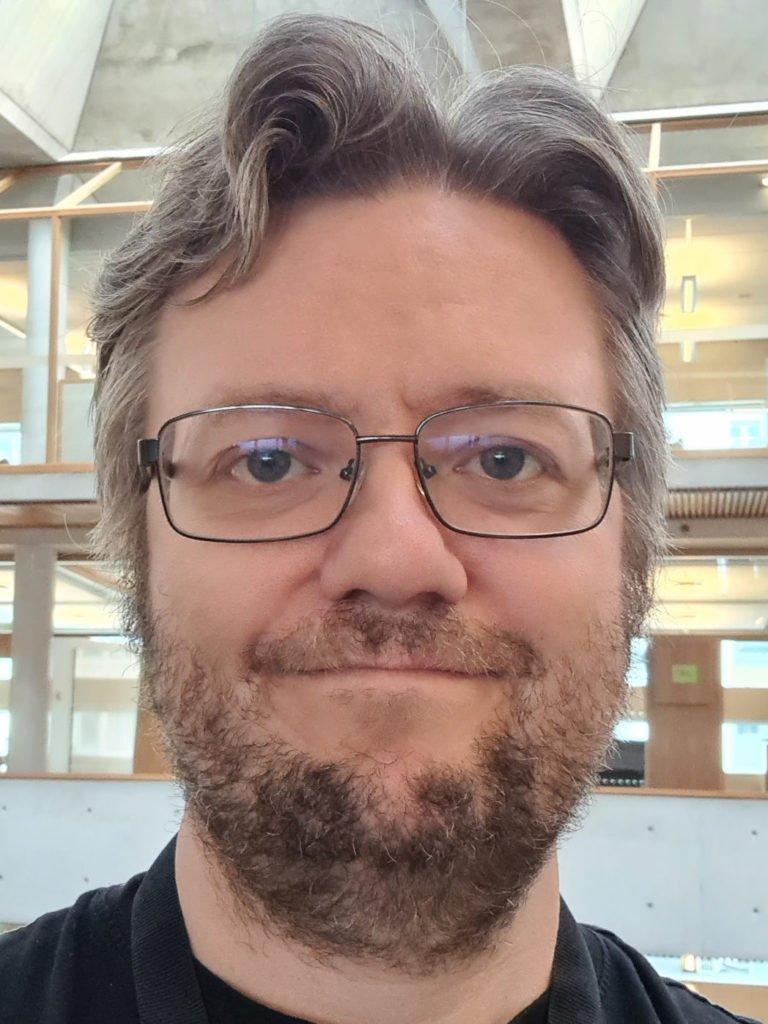 Eivind Mork
Host
-
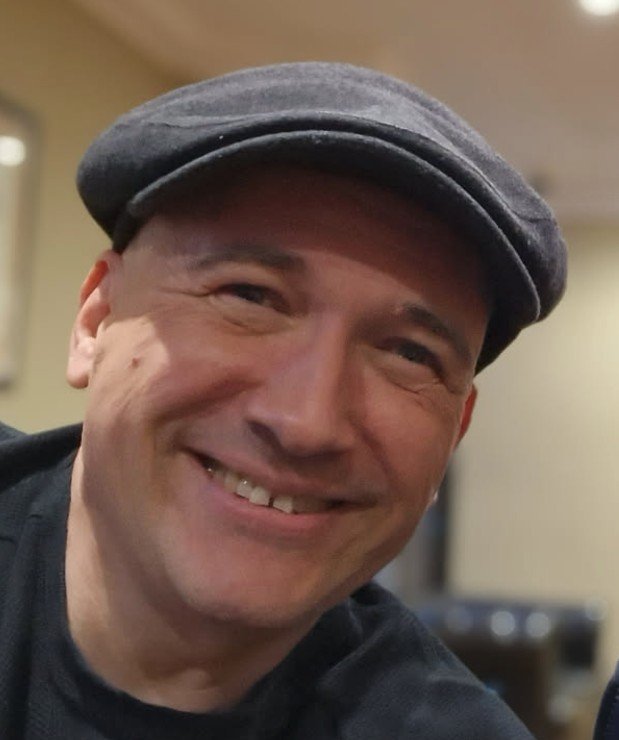 Joachim Schmidt
Guest
Chapters
Transcript
Welcome to another episode of the Humming Projector Podcast. Most often on forums and Facebook groups we read about the films, distributors, deals, etc. That's quite natural. That's what we collect. But it's also interesting and motivating to talk to people doing work for the community today, not just in the old days. And previously I have talked to the organizers of three conventions so far in this podcast. In the UK and in the US. And actually at the moment I'm drinking coffee from my CineC cup. But it's also about time to look at a bit outside the UK/US collecting circle. And today's guest is from Germany. Which is about time as Germany seems to have quite an active collecting scene. He has released 139 videos in his YouTube channel as of today. And this will be my 14th episode. Let that sink in a bit. How big of a difference that is between his production rate and mine. And his viewing stats crushes mine, where he often has a 4 digit number of views. I don't come even close to that. And I'm thrilled to announce today's guest, which is Joachim Schmidt from the Off2 project. Welcome to the podcast, Joachim. Well, thank you for having me, Ivan. Happy to be here. Yeah, I've been looking to this for a long time now. I feel that we have quite a lot in common with our projects and I very much look forward to talk to you about what you do in the community. You are most famous for making film-related videos on your YouTube channel, which we will soon get back to. But I'll mention that we have had contact for a while and I finally got to meet you in Blackpool in November, which was really great as we had been in touch for a long time. And I also mentioned that you interviewed me there. And you can go and look at the interview Joachim did with me in the show notes, if you dare to watch me stumble in that interview. And we both planned out our interviews a long time in advance, but now actually you will see the result of the two interviews quite close in time, but we both planned quite ahead. So we'll get back to that, how we plan and work. Before we talk about your project, let's talk a little bit about the German film scene first off as a backdrop of your work. Who were the major players in the German Super 8 industry? Yeah, I think Germany had a very huge market for Super 8 copies in the 1970s and it was marketing film. Marketing film was also big in the international market. It had a branch in the US and so it's well known in the English-talking collectors community. But also with Piccolo film in Munich and Ufa Bücher film, which is, well, the Ufa archives. Ufa is a big German or was a big German or still is a big German film production company. And so they had the opportunity to go into their the archives and taking whatever they want to sell it on Super 8. So those three are the biggest. Besides Interpatel. And I would say that Germany had the highest number of released titles on Super 8 in the 1970s. I suppose the German market was the biggest in Europe or one of the biggest in Europe. And there are many, many titles that haven't been released in any other country. And how would you describe the German industry versus the English or American industry? They are big, as we heard, but were there differences in what kind of films were released or genres or things like that? Well, on the one hand side, I suppose the especially American market started very early with regular 8. And so they had a lot of old sci-fi movies and stuff like that released at first in a silent way. So in Germany we didn't have a regular 8 market. They started directly with Super 8 and they took, on the one hand side, releases directly from the American and British market. Canfilms, Universal 8. Not the British market. I think that's only the American market. With dubbed German sound. But they also released European movies that haven't appeared on any other distributor. Like movies from France, from Italy, from Germany for sure. So there are many titles that haven't been released anywhere else. And they also released British or American movies that haven't made it to the British or American distributors. And I think they may be quite interesting for the English-speaking community beside the fact that they are in German. So they have to redubbed it again. Yes, because as a Norwegian, we don't have many Norwegian Super 8 films to say that it's an understatement. And we are, because we are a small country, we are used to watch films in English, but you are much bigger than us and had the voice in German. How is it for Germans? Do they collect English audio films too? Or does the regular German collector collect only German audio films? I would say mostly German because we have a big culture in dubbing films. So nobody, usually nobody, is watching movies in the original language. We all want to see them German dubbed. Besides very young people, my daughters for example, they always want to watch the original language because for sure it's better. But in the collector seen many people tend to collect only the German dub versions or if they buy an English one, they dub it on their own. There are many people who are also watching them in the English original way, but as you asked me, most of them prefer German language. To recap, Germany in the late 80s were still divided until the East Germany and West Germany got back to being just Germany again. Do you know, could you say you're grown up in the West and Germany, how was the film collecting in East Germany at the time? I guess that's quite different from the West side of Germany. Yes, I mean, I'm not really a specialist in this topic, but from the the interview I did with a specialist about this historic issue. In East Germany, they started with home cinema copies by far more earlier than they did in West Germany. But on a very, very low level. They only had a very, very small number of copies produced and had a long time printed on regular Super 8 and switched in the 70s to Super 8. But they only had silent film projectors. They didn't have any projectors with sound. Maybe a few of them imported them from Germany. But they published classic German silent movies like Nosferatu or a lot of cartoons from other countries behind the Iron Curtain. When did the German distributors end their work? Were there any distributors continuing longer, like Durand did in the UK? Or did most things wrap up in the early 80s? The huge distributors, Marketing Film, Ufa and Piccolo, they stopped producing in the early 80s. I think 1982 was the last year new titles were published. they sold them even longer. In Eastern Germany, they stopped producing prints on Super 8 with the fusion of East and West Germany. So I've heard that in 1990 someone went into the production area where they produced these film prints and they had a lot of them still freshly produced in the shelves. On the other hand, when the videotape came on and Super 8 was not a mass media anymore, there were still a lot of collectors who were not able to cope with this VHS format and wanted to rely to stay on the Super 8 format and because of the quality, which was by far much more better. And those tend to go deeper into the medium and started to buy and collect full feature films. And we had also German distributors for full feature films, but those were always small batches. I think maybe 20, 30 or... I don't even think there were 40 copies made for one title. I just want to briefly mention that you were big in hardware as well. I mean, everybody has heard about the Agfa stock and the Bauer projectors. And even today, we have the Antec Film Technik in Berlin. I actually developed a home movie myself in that lab. And they are a huge player for everyone producing anything today. Yes, yes. I think they're the only player anymore. Yeah. There's no one else you can go to if you want Super 8 prints. You can develop in other labs, but producing prints for distribution is another matter. So with that backdrop, let's talk about your project. Your project is called Off2. O-F-F and number 2. Why the name Off2 before we continue? What does that mean? In Germany we have a special wording. We have the normal cinema. The cinema where the blockbusters are shown, where the masses went in. And then we have so-called Off-cinemas. These are very small cinemas showing movies that are not so popular. Artistic movies, things like that. And that's a very common name for those small cinemas here in Germany. It's Off-cinema. And then I thought, okay, Super 8, home cinema. It's Off-of-cinema. So that's Off2. That's the one-hand side. And on the other hand, it's the 'to' is an 'up-to'. I don't know how to say this in English. Yeah, Off-squared, yeah. Yeah, Off-squared. It's Off-squared too. And this is a connection to my hometown because Mannheim is a very special German city because the center of Mannheim, the map is layouted in squares like American cities. Oh. And so the square is a common symbol for my hometown. And that's why I have this Off2. Ah. Nice. But what is Off2 and how would you describe your project for anyone that doesn't know that from before? What is your project about? Yeah, I try to make the Super 8 film print and the history of it and the special characteristics understandable for people who have never got in touch with it before. This is because I had the feeling that in the German media, I don't know how it is anywhere else, in the German media, when it was about the beginning of bringing cinema at home, they are always talking about the VHS tape. And I thought, no, that's not right. Someone has to tell what was before that. Where is the real beginning? I mean, at the end, home cinema started by far more early in the 1920s with Pate. Yeah. But as a mass medium and not a specialist medium, it was Super 8 in Germany. Especially in Germany, it was Super 8. Before that, we didn't have any kind of home cinema, which you can say that was available everywhere. And that's what I try to do. I try to make the format understandable for the people who want to know more about it. So it's not directly as a target group. The target group is not directly the collector. So it's more the person who is interested in media history and want to understand what was happening and how home cinema developed. Right. And I like that. And preserving history is close to my heart because, as most people probably notice, the average age in this community is quite high. So it's important to collect. So it's important to collect all this information while we have a lot of people able to tell us about it. I'm too young to have been in the collecting scene in the 70s. So I find this really fascinating. And you have both a YouTube channel and you have a website. What is the relationship between those two? Well, to be honest, from my point of view, the website is more important than the YouTube channel. But on the other hand, the YouTube channel needs much more time from me than the website. So at the end, I'm totally working for the YouTube channel instead of building up the website. which for sure gets larger by posting the videos I do on the website. But the relationship is on the YouTube channel, I have three formats. I established three formats on my channel. That's Retro. So these are digitized adverts and trailers, special trailers for Super 8. Then we have Dialog, which are the interviews I do. And the third one is Pearls, where I speak about film prints on Super 8 to make the film print understandable for people from the outside. The website, in addition, has articles about Super 8. I have nearly 100 magazines from the 70s and 80s to download in PDF. Images of the cover. So, I think it's interesting for someone from the outside so you can read it and you have your own speed to go through the information, which is another type of access to the information. Great. I love the systematic collection of information in that way, which probably don't come as a surprise, as I also run the Super 8 database. So, this is very close to what I feel is important myself. And in your videos, as you mentioned, you present film releases and just interviews. They are often in German, but I wanted to mention that you, in your later videos, do English subtitles, which was a huge plus for me. I had some school German, but my German is not very good. So, the English subtitle is really, really nice to have to be able to actually watch this. Yes, I started with the English subtitles in April 2022. So, since then, every video has English subtitles to open my YouTube channel to the English-speaking collectors community. And that's good, because I think that most UK and US collectors, and Norwegian for that sake, doesn't know too much about the German Sea, which was a surprise to me as a new collector, a big scene. So this is very good. And you have done a lot of interviews with big players, with marketing films and Piccolo, the people running marketing films and Piccolo. But you have also done interviews with new releases. And how do you look at that when you, as a sake of preserving the history, but you also look at interviews with people making new releases? Yeah, that's right. Because I want to portray also the actual situation. But I always try, when I do especially something like that, I always try to go one step back and not to be in this nerd mood, which is nice. But I always try not to get into this nerd mood. But when I do this, I always try to move one step back to not to be too much into the collecting scene and still having a distance. a distant view of it. To make it more understandable for someone from the outside and not to be too much in this nerd area. Which is especially with the Pearl videos very difficult to do. Yeah, and I must say that it's very, very easy to get into nerd mode in this collecting hobby. That's for sure. And as a new collector, there were so many things I didn't know. So what you do here is really important in my eyes. Thank you very much. But actually, I don't think that I'm... I don't know that much, you know? I don't know that much. I mean, I had three times in my life collecting Super 8. First time when I was 12 or 13 years old, then in my 20s, and then now in my nearly 50s, I started again. But in between, I didn't have any connection to the hobby. But there are many people in Germany who did it the whole time through and made every movement and read everything that happened at that time and they know everything. But I'm not that kind of person. There are many, many things I don't know. The difference is, I can present information. I think that's the difference. And that's exactly where I'm from, too. Because when I made the database, it was not because I knew a lot of things. It was quite the opposite. It was because I knew so little and had to ask the same questions over and over again to the seasons collector. So I think that actually can be a big plus, actually, when you interview others, that you can still be able to get into the role of new collectors, in a way, as you have not done this all your life. Yes, that's right. On the other hand, maybe I missed to ask some questions that could be interesting because I simply don't know exactly what I could ask. Or I, from time to time, I also do mistakes. That can happen too. That's just human, isn't it? Yeah, yeah. I do that all the time. I just wonder if people are too polite to mention it or not. It happens a lot in the community. More than you think about, probably. You had Jed Jones have documented a lot of his history in the German vaults on Facebook. Unfortunately, that disappeared from Facebook by some mysterious bug, we must say. We don't know why that happened. He has not got an answer. We hope to see that getting back. But he did a really good job talking about the run from the inside. But there are new film releases that have been made in the later years. We have more services getting to the surface. We have striping services. We have a person that actually offers color correction by doing his magic on unfaded film. We have the new Kodak Super 8 stock that has arrived. And even you have Klick und Sur in Berlin that now announces single 8 cartridges back. So there is a lot of things happening. And we have magazines that have been around for a while, like the Film Collector. And you have a more newer magazine, the Super 8 magazine by Jörgy Lussau. But what I like to see that happen in the recent years. And I know you are fond of that project as well. I was contacted by some German scientists, Nicole Breida and Frauke Pirck, two researchers at the Johannes Gutenberg Universitet in Mainz. They are part of the Dikehub Project. And both you and I have been in touch with them. And I think they are still early in their project and work on quite a lot of collecting information. But what they do is doing actually research on the smaller gauges of film production and showing interest in Super 8 releases, which is quite new. I don't know of any other project. There might be some, but I don't know of any other project that actually show attention in that way in this area. And I find that quite fascinating. Actually, last year in May 2023, I was invited to a conference, which is in Oslo where I live, to see they present some of their research so far, which is quite fascinating. And this is in line of what you and I are interested in, I think, actually looking at this phenomenon, to put it that way, and what that actually meant in the day. And for younger people, I think this is super important to be able to show them what happened in the 70s. So you and I kind of connected by both being approached for this project and showing interest in these things. Yeah, I mean, these are media scientists and the students are studying media science. So for them, this is quite interesting to see different formats so different from what they are used to in the present. Yeah, and why we were approached just to mention that. For me, the Super 8 database and what you also have collected, we all could offer some information that has already been collected. We do nothing for their research other than providing the data they can use. Yes, that's right. But on the other hand, I had done their two lectures at the university in front of their students and it was all about the history of Super 8 home cinema in Germany. And it was planned to have a live presentation of Super 8 Digests last month. It couldn't happen, but it may happen at a later time. So, I'm a little bit involved in the actual research of what is going on at university, which I appreciate very much because I really like doing lectures in front of students and getting asked So, let's make the presentation. I like that very much. That's really good. What I have provided is far less than you have, obviously. But I must say, it was quite weird when I was there in Oslo and listening to their work. It was quite weird to see my project being presented on the screen. Because for me, it's a hobby project. I am absolutely an amateur. And to see it being used in serious work was quite fascinating, I must say. Same, same. Same, yeah. It's nice. Isn't it a kind of appreciation? Yeah. Somehow, I feel it like that. Yeah, me too. And also, Andreas Chmielewski. Andreas Chmielewski is one of the biggest collectors in Germany. I would say he has nearly everything you can imagine. I think there are only a few Super 8 titles he doesn't own. Yeah. And he provides them also a lot with information, yeah. And he has been very kind to me as well. Most of the German films, not all of them, most of the German covers in the database are from his project. So, I am very thankful to Andreas for providing me with these covers. So, when you are making a video for the YouTube channel, how do you prepare for that video? It looks very professional as a viewer to listen to the videos. And when you interviewed me, you let me know in advance what to expect when you did the interview and you had a clear plan for the interview. And I know from trying to make a podcast that interviews doesn't make themselves. And I know also that making any media content requires a lot of work that might not be seen for people that haven't tried themselves. So, could you take us through the process? How do you work when you are making a new video? Yeah, it depends on the category, you know. If it's a retro, that's very easy because I just have to find material. Then I have people supporting me with digitizing it and then that's very fast and easy done besides subtitles. When I do an interview, I have to research first about a person I interview. I think same to you. Then I write down all the questions I have. And after that, I try to categorize them somehow in main topics. And after that, I usually have far too much questions. And I think, okay, this will take two or three hours and then I have to cut. So that's the way it is. Yeah. And so at the end, I'm coming over with a fixed number of questions. I send them to the person. And when we meet, when we meet, I hopefully have enough space for the cameras, which is not always the case. So this is at the end, this is not so much work, to be honest. Doing the pearls is massive. Because first, okay, easy to think about what title I want to present. After that, I have to research about the film itself. When was it done? Are there any nice stories behind it? When was it released on Super 8? And therefore, I usually have to go through the catalogues, because there is no list when which film was released, you know? Or I have to go through the forums if someone wrote something about this title. So this is very, very tricky. And when I have the text nowadays, I have it a little bit easier, because I've bought kind of teleprompter using an iPad, using an iPad and a mirror. So I can now I can talk the text very easy into the camera in front of my green paint wall. And because I always say "er" in between, I have to edit it. A lot. A lot. That sounds very familiar. Yeah. So this is the text part. After that, I have to record the Super 8 excerpt. And that takes also its time because I need 3 or 4 minutes and then I have to watch the whole digest afterwards, if I like or not. Or I have to do it backwards. So that takes its time. Or get an Elmo where you can take it out in the middle of the film. Just a tip. Good idea, yes. But the sound of the Elmo is too loud. You know, you would hear it. So very, very much in the microphone. That's why I take the Bauer, which is a sound. Yeah, which is very sound. And then I always have some kind of humoristic appearance when the Super 8 clip is played. I try to, the idea for that was to not just only show an excerpt of a film, but also to make some kind of comment on a visual way. So I have to think about what could be somehow funny. Then I have to record that also. And it's not always a fast thing to do because it doesn't work in the first, second or third time. And I have to put all those different elements together. And with all the special effects. Green screen. And I have a layer with Super 8. Errors somehow. A little bit dust. Yeah. To get in front. And the sound has to be fine. And then things have to be color corrected. And so that takes really a lot of time. And at the end the subtitles. Yeah. The subtitles. At the end. Okay. So this is huge. Yep. This is really huge. And that's why I think I will do one more season with Pearls. And they will be released this year. And after that maybe I'm done with the Pearls. Because the concept was, as I told before, to show people from the outside how a Super 8 copy, what does that mean? And I think they are loved by the collectors. I know that. And they want to watch it. Yeah. But at the end it's not the main target group. So, just to be clear, that's the way it is. Yeah. When you do an interview, how do you select the person to interview? And do you have a clear plan for the interview when you have selected them? How is that done? Or do you just pick the person that is available to you? I think one of the most important things is that the person is available. Otherwise it would be different. I try to interview people that are not available. But it's tricky, you know? Good point. Well, on the one hand side, I try to get people from the production side, which is by far the most difficult to get them, because in Germany, some of them are already gone or you don't find them anymore. And on the other hand, people that are active in the Super 8 community. People that are collecting, but not only collecting, but also producing something. So like you with the Super 8 database and your podcast. People who have done videos on YouTube. Some of them are even not anymore available, sadly. So this is, those are the two reasons. People from the production side or people nowadays active in the community. Yeah. And it's not that easy to actually define people that were active back in the day. Thinking about how many they must have been, it's surprisingly difficult to find people to talk to. That's at least my impression. I'm sure there are more people to talk to, but I wonder what it would have been like doing this podcast like 20 years ago. How much more information that might have been available. Absolutely. Absolutely. Yeah. But what I have, what I must say is that, for example, Mr. Menz, the founder of marketing film, for example, I think he's a person, 20 years ago, he wouldn't talk with me. He wouldn't have talked with me because he would have been in a totally different mood and he wouldn't be interested in talking with someone on my level doing a little YouTube channel. Same with Mr. Czajka from Picoda Film. I think, 20 years ago, he would just push me away, yeah, somehow, yeah. Nowadays it's easier because they have more time and they look back to what they have done and they think, "Oh yeah, it was somehow very interesting what we have done." Because, I think, especially the producers, we don't, in Germany, they were looking at Super 8 copies, it's really more like a business. They were not interested in the format itself. For them, it was an opportunity to make money and so they didn't have any problem switching to the VHS to make even more money. So that's different. That's different. And that's why I think 20 years ago, they wouldn't be interested in making any interviews. And it's probably easier to be honest about what happened back in the day when you have a little bit of distance to what happened, I would assume. Right. Have you made any changes of direction during the years in your project or have you been true to your original plan? At the end, I started with the project in 2019 and it went online in the summer of 2020 and I didn't change direction. Absolutely not. Absolutely not. I'm very, very, very constant in what I'm doing. The only thing I changed was at the beginning, I published one video per week. Oh, man. And that was too much. So I decided to do it only every second week and I still hold on that and I have a special rhythm. So every second week there is a retro video. Yeah, I'm really still on a straight way doing what I'm doing. And I think if this collapses, maybe I will stop everything. As a comparison, I made 12 podcast episodes last year and I realized that was a little bit too much for me. So I will step back a little bit this year. So getting it to your level is impressive. Yeah, it was too much. It was too much. And as you said also, it has to be fun. Yeah. It doesn't - it has to become work. Yeah. That has been a key part for me. It has to be fun. And if it's not fun anymore, I'll step back a little bit so it gets fun again. Because I want to do this for many years. So, let's talk a little bit more about Joachim. You have mentioned you collect film but has had some pauses during the years. What do you collect - what do you look for when you collect film? What kind of films do you collect? Well, from the genre point of view, it's absolutely science fiction. Absolutely. I'm always looking for something I don't have yet. For example, Dark Star from Aiva Films. I'm still searching. Hello. Weird, weird digests. Also nice. I'm absolutely not interested in feature films. Right. I prefer watching feature films or digital. So, sorry. Yeah. That's the way it is. A little bummer there. Maybe, yes. I love the special characteristic of Super 8 Digest to shrink the movie into 17 minutes or 35 minutes. I love that. That's great. And if it's reddish, it doesn't matter because it will be over very fast. Yeah. That's what I prefer with Super 8. When I was new to the collecting scene, Digest was very strange to me, but I started to get really fond of it as a format. Being able to just watch a quick digest and then off doing something else if the schedule is tight that day. So, nice thing to do in your everyday life. Yeah. Yes, besides the characteristics of the projection and the image and, yes, for sure, the sound. This is something totally unique and you don't have that anywhere in any other media. We don't talk about summaries of TV series on YouTube. We don't talk about that. This is something different. But anywhere else, nowhere else, you find Ben-Hur in 17 minutes. That's special. That's only there. Alien in 17 minutes. I love that. It's great. And I also love trash movies. I wouldn't like to see them in their whole length. It would be boring. But in 17 minutes, a really bad movie. It's just fun. I liked it very much. I enjoyed it. A lot. I see what you mean. If you could wish for just one thing in the community, what would that be? Any new projects or new projects or anything from the community? Is there something you would wish to see in the film collecting scene? Well, what I would love to see in the community is bringing the format more to daily life by Super 8 presentations. Free to watch for everyone. That would be cool. So that the format gets attention again. Yeah. Because it's fun. It's difficult concerning the licenses, but it's fun. And they're only extracts, to be honest. So it's not a whole movie. It's just a long trailer, isn't it? That would be great. And from the community itself, I mean, for sure, there are a few titles I would like to see on Super 8 as a digest. For example, Return of the Jedi, that's the Star Wars film missing. And Star Trek 2, because I think the colors would be cool. And they were in the sci-fi area again, so I can't get off my steps, so I'm sorry. I can't get off my shoes, sorry. So what makes you inspired to do all this work? I know it's a tough job, but you spend a lot of time in this. What makes you inspired to do this? I mean, we have touched this topic already, but… First of all, I think I do it because I think it's important. Because the way I do it, nobody else does it. And at the beginning, I also said in the first advertising video, I did on Off2. This is a topic that has never been touched by media science, which it now is. So, this is the big power behind everything, but also the very, very positive feedback from the people who are enjoying it. So, that gives me always power and motivation to do more. That's very nice. Is there any special, memorable moment you have had while doing recording or working with this project? Has there been any special moment where this was something special? Beside the day of publishing the project itself, which was very memorable, I think there are a few people I met for my interviews that were very, very interesting. Especially the first interview I did, which has no English subtitle. I'm sorry. Since years, I think I have to do this but didn't have done it yet because I did the first interview with the only German journalist who was writing about Super 8 Digests and copies in the 70s and 80s. And that was great because he told me in this interview things that have never, has never been heard in the German collectors community before. How things were done. This was the first time ever how a copy was made. Nobody knew that before that. How they did it. So that was very, very, very nice. This is one of the most impressive interviews because there was so much new information. It was astonishing for me. And the other hand, and one more thing is, yes, the connection with the university in mind. Because this brings Super 8 and the Super 8 medium to the next level. Yeah. I'll be really interested to see what they'll produce in the time to come. That will be fascinating to read when that comes. What is the most important thing you have learned? You've partly mentioned that now that you've got some new information that you've never heard before. But is there anything that you think that you have really learned from doing all this work that you didn't know before you started? Well, one thing I learned is that there are so many things I don't know, even if I think I know a lot. And very nice is also to get in touch with so many new people. Very nice people. To find new friends. So that's very positive. And it's a totally new area for me to find new friends. If you could choose just one thing to be remembered for in the Super 8 community, what would that be? The Off2 guy with all these interviews. Yeah. Maybe that? That would be good. I mean, it's quite a lot of work you have put in there. So, naturally, it was a silly question. And we'll wrap up now with the last question. What question do you wish I asked, but I failed to do so? And how would you have responded?
Okay. Maybe something like... Maybe something like... I mean, your questions are fantastic. And I'm totally happy with them. And so, you squeezed me out like a lemon. But maybe one thing could be what is coming in the future. Is there somehow... Do you see somehow, some way how you can transport the format more into normal life beside the collector scene? So, and this is something I really try to do. And my answer is: I really try to do that. For example, I have to say, Mannheim, my hometown, has to become... Will become, I suppose, it will become the center of the Super 8 scene. Because I'm in touch with a cultural club here in Mannheim who has a special location. And they want me to make Super 8 presentations regularly. Oh, nice. For free. Wow. And a friend of mine, also living here in Mannheim, he will do the same, but in a local cinema, which is even cooler. So we will have two different series of Super 8 presentations. I don't know in which rhythm it will appear, but this is coming. Super 8 is coming. I am in touch with a huge museum in the middle of Germany, the Ruhr Museum. They are making an exhibition about their region in film. So the film industry in their region. And they are located in Essen. And Essen is where Marketing Film and Ufa Bücher Film have been located. So they will also have a small area with Super 8. Super 8 copies. And I provided material for the exhibition. That sounds really interesting. And I need to get in touch with you again to hear how that went. And I really would love to go more into this presentation thing and bring the format into media areas like film museums and stuff like that. That would be great, but it's very hard because usually media historians and scientists think about Super 8. They don't think about Super 8 as home media formats as a totally uninteresting thing. And they don't think about the culture of the medium with its presentation, its special appearance. They don't think about that. They only see the titles of the films that have been sold. And usually those are not movies interesting for serious scientists. So there have to be a mind change and I want to push them. I want to push them there. Before we wrap up here in this episode, I just want to mention that we in the show notes will provide links to both your website and your YouTube channel. So we go look for the show notes and I really recommend that you go there. Even if you are English speaking, all your newest videos has English subtitles. It's really worth seeing. So thank you Joachim for showing up here today. It was a pleasure to finally be able to interview you. Thank you. Thank you. Thank you very much for having me. It was actually very, very suspenseful for me talking in English because I'm not so much used to. And it's very difficult to find the right words, but I hope I was understandable for everyone. Yes, I'm sure you are. And it's quite fascinating, isn't it, that we are two non-English native speaking persons that actually provide an English speaking podcast at this moment from Germany and Norway. Yes, but I don't know what the mother tongue people are thinking about what I'm talking, the way I'm talking. I don't know that. I think your English is by far more better than mine because you're used to watching English movies. We are a small country in Norway, so if we should only watch Norwegian subred movies, that wouldn't be much, I can tell you.
If you enjoyed this episode and want to follow us, you can listen to us and subscribe to our podcast using players like Pocket Casts, Apple Podcasts, Spotify, Google Podcasts, Amazon Music and YouTube. You can also use any podcast player supporting our SS. Go to our website, hammingprojector.com, to learn how to subscribe. You can also listen to any current and previous episodes on our website without any additional software. If you have any feedback for this episode, or a suggestion for a future episode, please send an email to feedback@hummingprojector.com.
And with that, we have reached the end of this podcast. My name is Eivind Mork, and thanks for listening.
Thank you.