13 – Special: Q & A with Ged Jones at Blackpool 2023
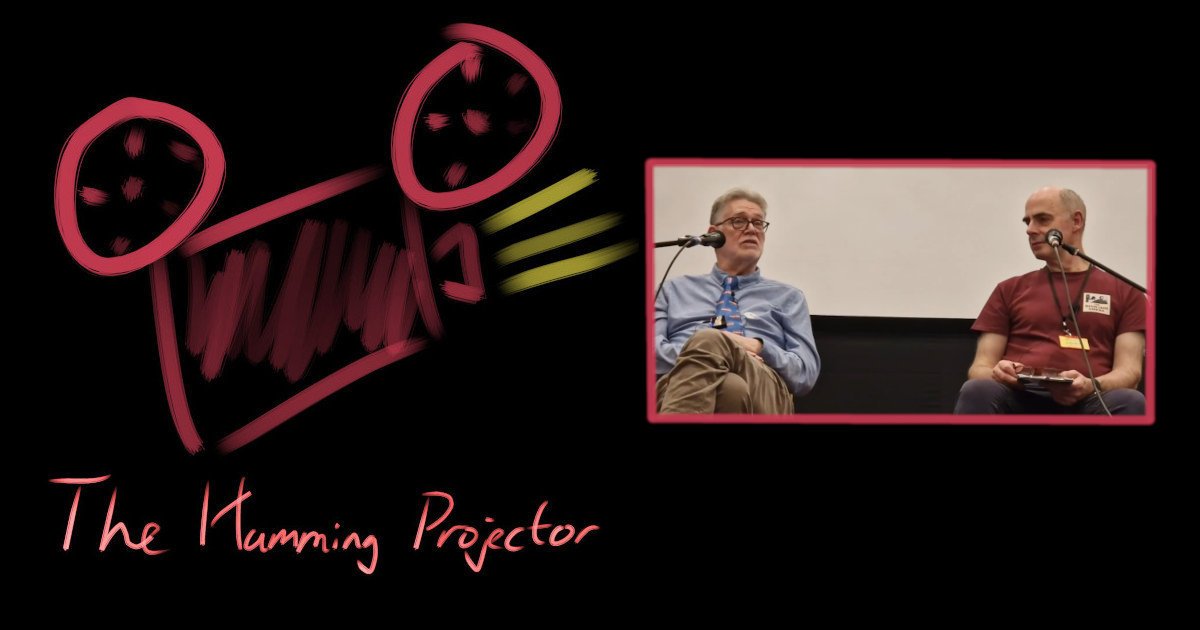
This special episode is a recording of the Q&A session with Ged Jones, former director at Derann, and Adrian Winchester. It was recorded at the Blackpool Film Collectors’ Convention, Sunday the 26th of November at the Grand Hotel in Blackpool.
A huge thanks to Ged Jones, Adrian Winchester and the organizers for letting us publish this recording!
The Q&A session can also been seen as a video from Super 8 database.
More information about the convention can be found on their web page.
Highlights in this episode
- We learn how Ged got employed
- Branches and ventures
- Deals
- Adrian discovers he had a bootleg
- Hard times when video arrives
- Derann invest in 8mm when the others stopped
- Derek spots an opportunity in the gents’ loo
- Did Derek aim to be a world leader in Super 8?
- Open days
- Did Derek love to watch film?
- The best and the worst part of working at Derann
- Derek and Ged becoming consultants for “The Abyss”
In this episode
-
 Eivind Mork
Host
-
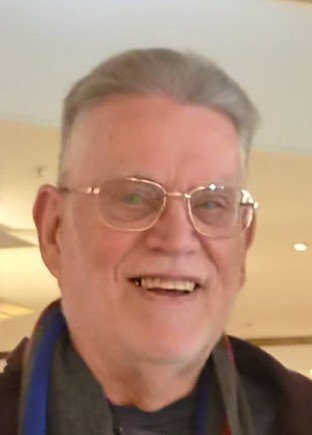 Ged Jones
Guest
-
 Adrian Winchester
Guest
Chapters
Transcript
Welcome to another episode of the Humming Projector Podcast. Today's episode is a Humming Projector Special. Sunday the 26th of November 2023, Ged Jones, former director at Derann, and Adrian Winchester, had a Q&A session at the Blackpool Film Collectors Convention. This is a continuation from the Q&A in 2022 of which an audio version was released in our episode 7. We are very grateful to be able to share a recording of that session here. But on Super 8 Database's YouTube channel you can also find a video recording of the same event in case you also want to see live pictures. A huge thank you to Ged, Adrian and the other organizers for once again letting us share a full recording of that event. And if you want to experience the convention first-hand, which I very much recommend that you do if you have the chance, the next convention will be Friday the 15th to Sunday the 17th of November 2024. If you want to learn more about the convention, you can listen to our second episode where I interviewed Simon McConway, one of the organizers of the convention. You can also go to their website, blackpoolfilmconvention.co.uk, where you can find everything you need to know about the convention, both as a dealer and as a regular visitor to the convention. And with that, I will let Ged and Adrian take over with their Q&A, and I hope you will enjoy it just as much as I did. Ladies and gentlemen, welcome to this afternoon's Q&A session. If you were here last year and you saw the Q&A with former Duran Film Services director, Ged Jones, I'm sure you enjoyed it. There was plenty of questions. We ran out of time before we covered quite a few things, and so I think Ged's very modest about this, but I can genuinely confirm that part two is happening due to public demand. And so thanks for coming to this one. I don't want to completely skate over some of the historic details because you weren't all here last year and if you were here you might not remember everything anyway, but I will definitely make sure that we go into some entirely new territory and of course there will be time for you to ask questions.
So, going back in terms of Ged's history with Duran, can you remind us of when you joined the company, please? It was in August 1975. I met Derek when I was working as a chef at the Talbot Hotel in Stowbridge and we became good friends solely because I'd sent for a Duran film hire catalogue and recognised his photograph in the catalogue so when I saw him on the car park I went up and introduced myself and we just went on from there. Eventually, about eight months later, he didn't actually offer me a job. I suppose I actually, it's difficult, I know I was by the ice machine in the kitchen and talking to him and said well you wouldn't want to work at Duran would you? And well that was it really, I started about a month later, gave him a notice in and that was it. Now Dudley is quite a large town in the West Midlands, isn't it? It was a large town, it's a big second-hand shop and pound shop, now that's all there is there. But am I right Duran also had a shop in Starbridge? Now we had a shop in Briley Hill which was primarily a hire, 8mm, 8mm and video hire. But it also had a small selection of electrical goods, you know, cameras, that sort of thing. And then probably about 18 months later we opened a branch in Lower High Street in Snowbridge, which was similar. It had a big video library plus white and televisions and things like that. So we had three. And then of course we had the joint venture with Margaret Crook in St. Albans. I don't know anything about that. What was that then? Well, he was very pally with Margaret. I mean, he'd known her husband, her father, who they had their premises in Water Street, didn't they? Capital Films. And they distributed Castle, Columbia. They had several labels and they used to distribute them in this country. Like everything, they got smaller and smaller. And I don't know how they kept in touch, but eventually they opened a shop that was primarily a video sales. But they also sold 8mm. And Derek and I went there just a couple of times. To be honest, I know that the office was above the shop. I mean, I couldn't take it. I wouldn't know where it was. I think you'll find that if you look through the magazines, you'll probably find some mention of it. And there was that fourth one. But even as a video sales store, it never took off. But unfortunately, probably, when we were in the States and we were offered the UK distribution of Universal 8, and then Paramount did the same. Margaret was actually the UK distributor at the time, so she lost both of those franchises. And I don't think she was terribly happy about that. And that Bournemouth brought that to an end. But we did have four altogether. And were you always based in the Dudley store? Yeah, I never worked anywhere else. No. So, in your early days at Derann, was the 8mm library still a major part of the... It was the main vein of the shop, really, when I went. I mean, sales were only big when Disney would release a new One Real Club, like Jungle Book, or Mowgli. Then the telephone would ring. But generally, it was the higher side of the business, which was the big one. And was Standard 8 still a major part of that in those days?
I'm trying to think whether or not I was actually there when he would... I mean, I know that he was offering certain titles in both formats. But I can't say that I can remember any of the titles issue after I joined in both formats. I think probably it was Super 8 only by the time I joined. Now I suppose when you joined there were Duran releases, some fairly obscure horror films and had any of the Hammer releases like Scars of Dracula appeared by then? Well I've got a feeling that Duran issued it as a bootleg in black and white. I think it was complete. On standard 8? Yeah. I don't know whether it was standard 8. I know I bought a copy. And I wasn't working there at the time. It was after I'd been introduced and I actually went up to the shop to have a look. And Colin, Colin Mallin, sold me a copy. I've certainly temporarily had a super standard 8 copy. Yeah, but it was a bootleg. It wasn't legal.
By the way, this is all of the boony, don't mind. I know, I know. So, would it be true to say in terms of Duran's position in the 8mm industry that it was, was it around 1978, '79 when you were acquiring the rights to certain Warner Brothers films, for example, was that, would you pinpoint that as a major step in terms of Duran becoming major players in Super 8? Yeah, that was definitely the biggest step forward. I mean, we've got Rank, EMI and Tygon, but they were all moderate. Saying that, I know we've got the Hammer horrors from EMI and they were probably the first big step forward for us. But UA were definitely the big step up. And we began to get a lot of overseas customers because of that UA. I mean, Errol Flynn was a big draw, whereas, yeah. But yes, it definitely was the biggest step up to that time. I always think it's a shame that that late 70s era, it was the peak of Super 8 in terms of the wider mass market. But video was very much on the horizon. There were already more obscure formats that were appearing. Is that something you were conscious of as a threat at the time? Because certainly by 1980 it was clear that it was damaging the 8mm market. But I wondered, did you have a period where it looked like Super 8 was really going to take off for longer than it did? It was a terrible time really. I mean obviously nobody wanted 8mm to disappear more than us, I mean it was our livelihood. But I remember there was a show at the Rembrandt Hotel and I think that was the year we might have been given the award for best film of the year for Robin Hood or Sea Ork. And we'd all got posh stands, it was very nicely laid out, it wasn't just tables and chairs, it was all fancy or... And all our films from UA were in their plastic cases, the clamshell cases, and I can remember Ralph Gill coming along and casting aspersions at the plastic camp. He didn't think it was worthwhile spending money on plastic cases. What I did notice was that we had so many people come to the stand and ask whether or not we were going to be putting them out on VHS. And I think we realised then how serious it was getting. That was really, I think, when we realised that we were in for a battle. And of course, when sales began to go down and the sales of video recorders zoomed up in the shop, we knew that we were in diet. But we never stopped 8mm. It was sort of put on the back burner. But probably the only things we would have released at that time during the video hiatus would have been like trailer reels and advert reels. I can't recall us putting out any new features or two reelers. Well, I imagine the low point would have been 1981, perhaps. Yeah, video was big by then. The video magazines had taken off. There was all the video trade people journeying on to it. I mean, even we employed a video sales manager and we had at least three reps on the row. Remember Peter Adams? He was also an 8mm man who used to sell 8mm in Coventry, but he came along and he was a salesman. So we knew we were in for a bad time, but our stuff never really took off. We never had a title really that could fight against the big boys or even some of the other smaller boys. They all seemed to get better titles than us. We just struggled along. I mean, thank God for ITC, really. Well, no doubt you were monitoring what was happening with companies like Walton, who went into video, but it certainly didn't save them and Mountain must have been another going out of business. Mountain, I think they were just too old-fashioned. I think they didn't really want Mountain 8mm and they've issued a few titles. I've never actually seen a - well, I've seen adverts for them, I've never actually seen a tape. Whereas Mountain, I mean Peter Burt would have issued Two Dogs Fighting if he'd have thought it could have sold and made a few copies out of it. But, erm, well I think some of his releases did have animals fighting in Africa. But, erm, Walton were very, erm, in fact, what titles did the release? I don't know. What, on video? I remember one was the Hammer film X: The Unknown. Really? I believe so, which, I'm not sure how they got the rights. Did they have the rights? Well, as funny as one of the questions that Jochen asked me out yesterday about imports. And, erm, he said did other companies do it? I think Powell might have done a bit. I don't think Ralph Gill ever did anything. But Mountain would have put it. If you'd have gone in there with ET, he would have said, "Oh, I'll cut it and send out a little..." He would have done. To give credit to Derek Simmons, I think arguably the most extraordinary thing he did was to have the vision to actually invest in 8mm and acquire the rights to new titles at a time when some of the other people who were in the business would have thought that was completely crazy. Yeah, yeah. So, can you remember a period, and I imagine this would be at 82, 83 sort of time, where he thought instead of just the odd trailer bill or whatever, it was the time to really be bold and do something like, well, Razor Titanic was the one that really astonished people by having a feature. Well, if you were in the gents' loo washing your hands next to his royal highness, would you have even spoken to him? I mean, Derek saw an opportunity and grabbed it with both hands.
You don't mean literally. Probably shouldn't say that, really, shouldn't I? But, I mean, I don't think I would have done, I'd have been too modest to have, you know, but Derek saw the opportunity. And I really don't know what the full conversation was, but for him to offer the rights, full rights, to those three films. I mean, I don't think that Q: The Winged Serpent was on the menu at the time, but when we actually visited ITC to sign the contract for the three titles that were the Q: The Winged Serpent was added to it. But for any audience members who think you were talking about a member of the Royal Family. It's Lou Grade. So when Duran launched into this exciting period that resulted in Duran becoming world leaders in Super 8, do you think? I don't think we ever considered that. I don't think that ever, that phrase never entered our minds. Well, it did appear in some advertising material though, because, well, there wasn't anyone else. What era? I guess about late 80s sort of time. I'm sure that appeared on ads in movie makers. I haven't got to that era yet. I'm still scanning the magazines from 1976. But that must have taken significant investment from Duran. Do you think Derek's attitude was, it's a chance for Duran to become a big fish in a smaller sea? Do you think he saw it like that? Or was he a bit apprehensive and far from sure that that was going to work? I don't think he ever saw Derek apprehensive. He just would make up his mind to do something and do something. But at the same time, I don't think he ever considered that we'd got to be the biggest and the best. He just issued stuff. I mean, people used to call him the King of Super 8. But it wasn't a mantle he actually wanted. It was just given to him. I think he used to find it slightly embarrassing. But he just accepted everything. And if he was asked to do a speech or a question and answer, he was the first to say yes, because he wanted Derann to be out there all the time. It was the only way you could keep it going was to make sure his presence was felt everywhere. He wasn't afraid of... and yet he didn't like doing public talking. You know, he would get really worked up about it. A bit like I am. Well, you'd never guess that. He really seemed extremely confident and charismatic. No, he would do it, but my God, he was glad to get off the microphone. I mean, even Blackpool used to, you know, he used to make the announcements. Even that would set him going. One thing I'd like to ask. I've never heard anything that really gives a sense of this. The business from Super 8 that Derann gained in the kind of heyday of mid-80s into the early 90s, was that on a higher level from Derann's point of view in terms of the contribution to Derann's income to how it was in the mass market days of the late 70s. Because I imagine that Derann were releasing more in that mid-80s onwards era than they were earlier, but then there wouldn't have been quite so many collectors around and so I wonder if you can compare those two eras. The one really, I mean, in the 70s, alright, there were more collectors, but we didn't have the films for them. Later on, the collectors dwindled and we had more films to offer, more pricey perhaps, a better selection of films, but there weren't the number of collectors that there were in the 70s. A lot of them had gone over to video and some would never come back. Some people had both mediums. I mean, I'm sure there are people either who have got video equipment, DVD, Blu-ray, 4K, you name it, 3D, but they've also got a projector that's they often prefer, but eventually always get round to getting the video machine out. It's a difficult question to answer. Well, say around 1990, about how many staff did Derann have and how many of those were just completely focused on the film side of the business? Well, by 1990, the video side distribution of the video machine for VHS and all that had gone, so we'd lost the video manager and the video staff. But downstairs in the electrical goods department, we still had probably four members of staff. And then we had the video library and probably that had at least two, sometimes three members of staff. Whereas, I can remember a time in the 80s when we, we used to have a Christmas dinner every year, Derek would always have a Christmas dinner and all the staff were invited with their partners. And he used to pay for everybody, including the drinks. And one year we had so many, we in, it was an entire room we took over. We didn't have just a table, we took over an entire room. And probably, do you remember that Gary? How many would you say were there? 60? Do you remember it was a big horseshoe? And the magician did those tricks and everybody thought he was a terrible magician and it turned out that actually it was part of the show and the people were embarrassed because they didn't realise.
It wasn't me though. No, it wasn't you, no. It was another customer, local customer, he was a big Elvis fan. Bill, yeah, Bill. But there must have been 60, so that means we must have at that time, we must have had 30 staff. Wow, that's remarkable. Well, I'd like to throw it open shortly, but one thing we didn't really go into last time that I think has to be mentioned because it's such a major part of what people associate Duran with, and that's the Disney deal, which of course was phenomenal. And I wondered if it was significant in terms of Duran getting that deal that, unlike possibly any other UK company, Duran did have a relationship with Disney in the 80s because you were gaining the rights to re-release shorts like The Old Mill, for example, and so do you think the fact that you already had that relationship helped? Yes, oh yes. That relationship went on even before that. I mean, when I first met Derek and I would go down to London with him on business, we used to meet a man from GAF who obviously were the distributors of the Walt Disney product at the time. Do you remember that? GAF? No? What was that? Well, GAF were just the distributors of the Walt Disney material. Walt Disney didn't have their own distribution set up. They had GAF. Who were the people with the 3D glasses? Where do you think we got those from? And we had millions of those things when they stopped doing them. But we used to meet this chap in secret I've got a feeling it was never in an office. And it was in a cafe somewhere and they were taught and Derek would be told oh we're Disney are going to be putting out it was only they were only doing silent versions at the time they weren't doing sound and they used to sort of say today we're doing this we're doing that and everyone to see a cover of that one oh that one's nice that and that was just chit chat so he knew somebody even in those days so there was a some sort of relationship even going back to the mid 70s. Right. Well I think it has been said that Duran eventually wore them down and they got fed up saying no I don't know if there's any truth in that. Well it's probably in the long run it's easier to say that but I mean every time we went to see Disney and their offices weren't anything special I mean the offices were very small and pokey and it was only when we got to see the woman and I've forgotten her name. Was this Maggie? Maggie, yes. Kimberley? No, I can't. And if anybody's got a photograph of Maggie I'd love one for the magazine and you know the she was our guest of honor one year and people must have take she did the draw and everything but do you know I can't find a photograph of her. But Maggie was a bit of a frumpy looking woman that's the best way to put it but she was down to earth she was American and she was for some reason she never really asked permission to do anything she just did it and I think we were quite surprised I mean when when she suggested that we should start with The Little Mermaid which is probably their latest yeah very up to date so I mean we just jumped at I don't know we would have jumped at anything just to have had the Disney name behind us but she never said no to any product except Fantasia which she said was off limits and there was one other title that she was never very happy about which I can't think of but we would offer she they would often offer us titles but if they didn't like he was never very struck on the Robin Hood film and he was never struck on Alice in Wonderland so we never I mean we were offered them but because Derek wasn't particularly fond of them we said no and then they would just suggest another title and every title was sold reasonably well and don't get me wrong not every title made money because just getting a negative over and paying for the cost of shipping used to cost like $800 so you have to sell a few copies and you know to cover all that and sometimes it just never happened but when you had titles like Snow White, Beauty and the Beast, Jungle Book, 101 Dalmatians they sold extremely well and they helped cover the losses that you might incur on other titles. Do you think pulling off that deal would have been Derek's proudest moment? I'm sure it was. I think he would have probably I think he was more disappointed at the fact that we lost the Columbia deal than he was of getting the Disney deal to be honest. And I think he would have liked to have continued with the Warner Brothers deal but I don't know because I wasn't really involved in that then I was left in charge of the shop and 8mm and Mike Dimmock used to go down with them then. I wasn't there physically in the room so I don't know what transpired between them. So I don't know why the Warner Brothers, why we never proceeded with other Warner Brothers titles. I know we had Warner Brothers titles in the catalogue that never came to fruition but I don't know why. Well I think I should invite audience members to ask any questions. Does anyone have something they'd like to ask?
Good.
And over here. Yeah, uh, Ged, did, um, Derry cover, uh, passion for showing films in his own home or was this just a commercial thing? no no he loved he loved film yeah he had a 16 mil projector at home he had he had a small collection of 16 mil um his favorite being the original dracula and jolson jolson sings again um pinocchio he had all that plus a lot of his wife didn't and didn't like horror films so she was much more on on the um musical side so he had a fair amount of musicals for Anne to watch um Did he keep the copy of all the prints in his store? No, no, it was something I suppose when you're working in it all day you never think about it and he got to a stage where one day I can remember saying oh I must take home some copies of such and such and so because he'd never taken one home to view but Derek was um he had a he had a double garage built on the house and above that garage he had a room built which was turned into his cinema and that was his cinema upstairs but outside you wouldn't know it was a cinema because he had a window put in there with stained glass in so if anybody passed by just just like a room because he didn't want anybody to realize that there was a home cinema in there and he could show 16mm, standard 8, Super 8. He had a video projector so he could laser vision was the big thing he had a dozen dozens and dozens of laser discs and he preferred that sound he did like the sound of laser vision he was never happy about the sound of 8mm he always thought it lacked but he would never really say as such obviously it was against his own good to say go over to laser vision but he had a good selection of DVDs and Blu-ray he had a few because Blu-ray was just becoming popular when he passed away so he hadn't got too many Blu-rays but he had he had all mediums in his in his uh room but even from the first time first time I ever went back to his house before I even worked there I can remember him showing Jolson Sings again I think. Another question?
Hello. Nice to see you again. And you Mark? My dad, Tony Hutchinson, we knew for many, many years. And my dad would always talk to me. Oh I went to the Derren Open Day. Got this, got that. I just wondered if you had any amusing stories of his adventures when he came to the Open Day. Our Open Days are a blur because we had so bloody many. When you think that we were having at least six a year. Perhaps even more because I mean we used to stick them in. When you think they're in the middle of the summer you wouldn't want one. But we used to do a special Summer Open Day, an Autumn Open Day. We used to have Halloween Open Days, Christmas Open Days. There were that many of them it becomes a bit of a blur. And we did it for, well, until we closed. We even started doing Saturday Open Days. There were one or two when Tony was a guest dealer, so that was unusual, wasn't it? Well, we were trying to revitalize the whole experience, because he was becoming tired. So we used to have, we used to invite them to come along. But Tony was a bloody good man. Do you know, he would never bring film to sell, because he didn't want it to interfere with the sales of our films. So all he would bring was magazines and books. He would not bring film. He was a real gentleman. That's a nice story to know that. Simon had a question. Hi, Ged. Working at Deran, what was the best thing and the worst thing? Best thing and the worst thing. The best thing was the, the very fact I was able to watch film. See, I don't think people realize that it wasn't 8mm that I loved. It was film. It was the cinema. And I'm not talking about today's cinema, you know, these big complexes with no atmosphere whatsoever. I'm talking about the days when I first started to go in the 60s, when they used to have curtains, you know. I mean, that's what I called them then. I mean, I know now we say tabs, but it was curtains. and the music was soft and soothing in the background. You didn't have pop music being played while you were waiting and watching a white screen in front of you. And the very fact that that was film and I was working in a place that produced those images and I could reproduce that at home if I wanted to. It wasn't the fact that I was holding a piece of film, it was just film. Worst days, attending video exhibitions, especially like the Heathrow Penta, you know. Those were the days when I considered packing my trunk and leaving the circus. I thought it was going to be when the striping machine dried up. I think I coped with that better video. I couldn't cope with video. I couldn't cope with the people who were involved. It was like working with 122 second-hand car salesmen who'd bought their wives and and their push chair with six little kiddies in it who were throwing up. No. No. It was a different world. We'll have to wrap up shortly but is there perhaps a last question? Gentleman here? So, to wrap up then, what's your favourite film of all time and did you badger Derann Film Services to release it? Probably wouldn't have released any of the films I like. I'm very much a '50s sci-fi fan so any monster with a zip up the back was my cup of tea. I mean, Derek was very much the same but, I mean, probably at one time he would have put it out. I remember him telling me once that, who ran Whatso Films? What was his name? What was his name? Who ran Whatso Films? Raymond Watson. Was it Raymond? Thank you. Ray had told him, "You put it out, put out anything you want and let them decide what they want to buy." And so, at one time, this is why we used to release such, I mean, when you think about it, those early catalogues were full of B-movies, The Severed Arm and Bloody Apes. I mean, dreadful trial. I mean, now some of them have become a little bit of a cult classic now, but at the time they were looked at as being dire tack. I guess the rights were relatively cheap with those films. Well, they were all from Grand National and probably all they asked for was 50 quid, but that £50 was all we paid up front for the rank product. They didn't want any more than £50 a time. Gone with those days are good. I mean, when we got down to UI, I mean, they weren't talking the 50s, they were looking at like £500 a title. And that was something that Disney didn't want any upfront money. They only wanted a percentage of the profits. What about 20th Century Fox? Because you were releasing some great films from them. I don't think we had to pay anything upfront with Fox either. Some of them were really... I don't really understand how they contained... You can understand why they've gone out of business, can't you? But no, a lot of them didn't. They just wanted a percentage, you know. I think 10% was the average. So if a film was sold for £235, they wanted 23 quid. When you were dealing with these companies like 20th Century Fox, do you think sometimes you were talking to people who had a real love for film as a medium and maybe that caused them to be more cooperative than some might have been? Because you do find in the 8mm world, quite a few people who worked in film professionally. So I'm hoping that maybe some of them were helpful in terms of the deals. I don't think really that it was a job to them, I think. That's the horrible thing. I don't think I actually can honestly say that I met somebody in an office who loved film. They just enjoyed the fact that they had a job, as Londoners might do at the time. And it was, they felt it was an impressive position to be in. And I mean, let's be honest, if you, you know, you've got a girlfriend and she says, "What do you do for that?" "Oh, I work in Water Street." That must have been an awful plus for them. But I don't think that generally they really had a love of film. I really don't. No, I don't. I mean, 20th Century Fox, all he was worried about when we went to see 20th Century Fox was whether the abyss was worth them putting out. Yeah. That's all he wanted to know, do you think this? And he took us upstairs to a private screening room where we had to sit through the abyss. And he says, "What did you think of it?" Because they didn't think that it was a good film. But do you mean actually release it? Yeah. In cinemas. Do you think, "What do you think we ought to do with it?" he said. Well, that's an extraordinary story that you were consultants on whether the abyss should actually get... I'd quite enjoyed it. And there was only us two sitting in this preview theatre and it was... They had several preview theatres at Fox, apparently, and this was a big one. Must have seated about 60 people. And Derek sat there. So what was your verdict that you... Well, I enjoyed it. And Derek, he... Well, he released the... Well, I think Derek enjoyed it. He didn't understand it. He was dreadful of films that had a complicated plot. But, you know, they were... they were odd... they were an oddball folks. I think that the one I can honestly say I remember that did like what he was doing and enjoyed the film was somebody... it was the chap in AVCO Embassy and all I can remember was his first name Chris. I can't remember his surname, but he had a genuine love of the films he was selling. But that's about the only one I can remember. Well, sadly, I think we could keep talking for quite a bit longer, but it's time to wrap it up. I would like to say personally, for anyone who didn't go to the Duran premises in the West Midlands, I always viewed it as an outpost of Hollywood. It was always a very exciting place to walk into. And of course, Ged, as one of the directors, was a major part of making it a hospitable place. And so, I'd like to say thank you very much for Ged, for returning. I'm not sure if this should definitely be the last, but it's been great this year and last year. And if you can think of suggestions for people to do this job, there must be other people out there with their own tales to tell. Any suggestions would be welcome. Yeah, anyone who's still... What about this Perry, this Perry, Perry people, there must be a lot of... That's what I suggested. Perry, the actual Perry man, Perry died a few years ago, but there is, the man who ran it after his death and before his death was a gentleman called Ian O'Reilly. But I think he's sort of left the scene. I mean, he's part of the Duran group, but he never participates. I don't know what age he is. I think he's older than me now, isn't he? I'd guess roughly about the same, perhaps. You're going 5th, yeah? I wish. It's my birthday Tuesday. I'm 75 on Tuesday. Wow. Happy birthday from us. Well, we've really got to end it there, but let's hear it for Ged.
Thank you.
The End.