
10 – Working at Derann – An interview with Ged Jones
Often when Derann is mentioned we hear mostly about releases and deals. In this episode Eivind talks to Ged Jones, a former director at Derann, about his work there.
Topics in this episode:
- Derek founding the company and selling from his home
- Derek’s first shop and moving to a new one
- Colleagues working at Derann
- Ged working very late and sleeping in Derek’s office
- Operating the sound, striping and printing machines
- Customers visiting
- Ged’s favorite and and least favorite parts of the job
- Good and bad periods
- Signs of the end
- Conventions, including one without any visitors
Links:
In this episode
-
 Eivind Mork
Host
-
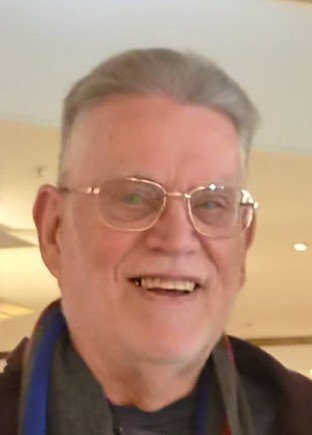 Ged Jones
Guest
Chapters
Transcript
When Super 8 was past its golden era and most distributors had closed the doors, there was one company in the West Midlands that kept on producing releases longer than most other companies. And the name of that company was Derann. Welcome to another episode of the Humming Projector Podcast, where I am thrilled to have former director of Derann, Ged Jones, with me today. Welcome to the podcast, Ged. Good afternoon, or is it good evening? Ten past six? Ten past six, yeah. Ten past five here. Simon McConway said in the episode about Blackpool that if there ever was any Super 8 royalty, Ged Jones would be Super 8 royalty and I am sure most listeners would agree. And yet, when I work with my Super 8 database project and ask you all sorts of questions, I know you as the most down-to-earth kind and helpful friend. And now you help me once again with my podcast by showing up here today. And before I started this podcast, I wrote down names of people I would like to interview. And I can tell you right now that on top of that list was a Mr. Ged Jones. And so thank you so much for being here today, Ged. I'm honored. Thank you. I started too late in this hobby to experience Derann first hand. And I would love to learn more about Derann. And often people talk about the releases, of course, that's what we normally focus on about. But I can read in catalogs and know a bit about the releases, but it's much harder to know how it was to be in Derann and around Derann in its heyday. And I hope to learn more about that here today, how the atmosphere was at Derann. And before we start, I just wanted to say that the best source for knowing more about Derann would be your Facebook group, Ged, that is called Derann Vaults. And I would highly recommend anyone that's not a member of the Derann Vaults to go in there because Ged posts loads of very nice information in that Facebook group and I will link to that in the show notes in this episode. So, about Derann. First off, I have heard people say Derann most often and someone says Derann. What did Derek say? Derann. Derann. So I said it correctly all that years. Der from Derek and Ann from his wife. I know I was afraid that I had to relearn that after all these years but I'm glad to know it was Derann. So let's start with the basics. Not everybody are from Europe of the listeners. Although I guess most people would know about Derann. But could you tell us a little bit about the company? When was it founded? And when and whom founded it? Derek founded the company in about 1964. I don't think he called it Derann at that time. He operated, he was working for the Co-operative Society which is a large group of stores over here. He worked in the electrical department and did a lot of window dressing where that's how he got his flare because he did have a flare of displaying product. And he couldn't get film out of his blood. He'd worked as a projectionist for many years on and off. It was just one of his many jobs. And he'd obviously got a small 16mm collection. And obviously he went on to eight and it was mostly standard eight. And he thought it would be a nice idea to have a small library. And he operated that library from his home which was 171, a little 17 Wentworth Road it was. Which is only a short walk from where I live at the moment. It's just a semi-detached house. And he advertised in the little, you know, the little strips at the back of magazines. Not an advert. It was one of those little ones where it was just, it might happen. Marge would like to send you some photographs. And then it would have Super 8 films for hire and sale. Send for a catalogue. Sixpence. And then it would be 17 Wentworth Road. But slowly he added the name Derann. And it continued there for several years until, because he had customers arrive at the house thinking it was a shop.
And Ann was a little bit concerned about these. Some of them didn't look very, she didn't want them in the house really. I mean she didn't mind most of them, but some of them she was a bit wary of. And so Derek realised that he couldn't continue to operate from home. So he looked for a small shop and he found a shop at 168 Sowerbridge Road, which is not far from Briley Hill. And he continued there for a number of years, but he quickly outgrew. It was, it now just sells garage parts, you know, for cars. But it was just a one shop downstairs and a room upstairs and probably a toilet come kitchen in the back. And he looked for larger premises and he found 171 Stairbridge Road. And that was basically an old sweet shop with two rooms upstairs, two rooms downstairs, a loo. And when I joined the 16mm library, which was operated by Steve, was working in the back. And the shop and the printing press and everything else were in the other two rooms downstairs. And it, it, I don't know where, when he thought of the name Duran. He never, all I know is it's half Derry and half Ann. But, it still, I mean we used to have people come in assuming that we'd got the name from Duran Duran, the pop group. Right. But, they just assumed that they owned the company. It was ages before we could explain to them that, you know, it was something, nothing to do with the pop group. It was a busy, I mean, there was only what, one, two, there were only three staff. That was Steve, Colin and Dave. And then we used to have a part-timer come in who used to do the bookings. Because we used to have a tremendous amount of bookings. And he used to come upstairs and handle the bookings. And if anybody phoned, he would take the phone call for bookings upstairs as well. And that was all there was. So when I joined I was just, well, I used to make the catalogues. And I was instantly shown how to use the damn printing machine. So I was on the printing machine more times than I care to remember. Then I was shown how to record. And this was when we only had a Lever's Rich machine. And every film came from Filmatic. And it was on a reel. And so if you had, if you ordered 20 copies of a cartoon lasting six minutes, you had 20 little reels. And you used to have to lace these in this machine. It used to take longer to lace, lace it all up and then lace the Magmaster than it did to actually record the print. Right. And that only recorded at two times speed. And I learnt how to do that. But after a few months, and Derek was not well and he was having time off. I used to stop up at night because I lived over the shop for a time. Because after I left my work as a chef, I lived with an elderly gent who eventually got fed up off me and asked me to go. So Derek was kind enough to let me, he let me have his office and I turned that into a bedroom. And I lived so, when Derek was poorly, I literally used to stop up till 10 o'clock at night recording mainly mountain cartoons. You know, Fred Flintstone, the little short things he used to do and what was the one I can remember? The very end. Things like that. I recorded hundreds of them. And then I just used to stagger upstairs and get into bed. But it kept the business moving. I just wonder, which timeframe do we talk about now? When did you start in Derann? I started in 1975, about August. I mean, we weren't there very long after I joined because we moved in 1980. 1979, 1980. But I mean, during that period we had an extension built on the back, which was probably almost as big as what we already had at the front. So in that room we moved the printing machine and the stock room. So we had all the stock at the back. A large table to do the boxing and that and put the labels on on the films. If the film had a label. I mean, at that time virtually, well, probably only a dozen films had labels. The rest were just stuck in white boxes and a little thing typed and stuck on the front. And then Mountain contacted us and asked us whether we would be prepared to help them out with the recording of the Ken films. Because they, at one time, Mountain, rather than import Ken prints in boxes, used to persuade Bob Lane to send them a Magmaster and a negative. So they ended up with a negative for, let's say, the Sound of Music, plus the Magmaster, which probably they had several copies made, the Magmaster and the negative. And they used to send hundreds of the Sound of Music, all on 400 foot reels, plus the Magmaster, which we used to have to keep because we were doing them all the time. And we recorded hundreds of prints of the Ken films. And a good many of the full length features of Top Hat, Citizen Kane, King Kong. Hundreds and hundreds of them we did. And we had brand new machines that were made for us in New York by Magnatech. And then somebody came along and tuned them all up supposedly so that it gave us the finest quality. And as soon as the chap left the door, Derek took over and did it the way he wanted it. Because there was far too much topping them. I mean, they did it. It was just, most projectors just wouldn't have handled the amount of treble that was there. But because of those machines in the back, we just outgrew the space again. And then the 60mm library was constantly growing because of the new titles. So we started to look around and eventually found that place at 99 High Street. Good days. They were fun days. That was the fun days. That was the fun days, I'm sure. How was the everyday life at Derann for someone working there? How would you say the working environment was? I mean, I guess some of the people working at Derann probably were film buffs wanting to work there? Or were the people just having a job? What kind of people worked there and how was the atmosphere there? Well, Colin, who was a member of the Derann group, Colin was an out-and-out film fan. I mean, he did like the older films. I mean, Old Mother Riley, Norman Wisdom, he loved those and he loved the Hammer films. Whereas Dave, Steve enjoyed films, but it was just a job where he was conscientious with his work. He knew the films, he would make sure he knew what the film was. If he added a film to the library and he didn't know what it was, he used to watch it, whether or not he liked the film, I don't know, but he needed to know what he was going to rent out. David was similar, I suppose. Ron who came in really, it was just a matter of writing in a book, so Ron really wasn't a film fan. But everybody did enjoy films to a certain extent. I mean, I was a nut. And Derek most certainly was. And I enjoyed things like musicals, Glenn Miller story and stuff like that. But you put on a Hammer film, the first note of the music, the first note of the music and she would be out of the room in a flash. Even the music disturbed her. She wasn't a great horror fan. And so, I mean, we used to all go to the pictures together, but Ann never accompanied us if there was a horror film we were going to see. Did you watch any films at work? I mean, you had all the films back in the back room? No, no, no. When Disney would release movies like Beautiful Briny or a new Jungle Book Extract, we would obviously, we'd have 50 and stick them on the shelves and we would always put one on to have a look at it. And I think we were always extremely jealous of the quality, because you've got to think that Derann were issuing films printed by a lab called Filmatic, who didn't have the best reputation. and we used to, I mean I can remember watching One Million Years B.C., the remake, the Hammer remake, that Walton issued. God was I jealous. The quality of that was, I mean I love the film, but the quality of it, I just could not believe how good it was. And it was explained to me how they'd got that quality, and I understood, but it didn't help my jealousy, you know, I couldn't. It was years before we were able to come up with quality like that. Years. I think it was probably United Artists before we were able to produce quality like that. But we never really, we didn't sit and watch feature films, no. Too busy. Always too busy. And we used to close for a lunch there. We used to close from 12 till 1 or 1 till 2, I can't remember. And half day Wednesdays, we used to have, we used to close on a Wednesday at lunch. It was on a Wednesday at lunchtime and that was, you know, for lunch and we never reopened until Thursday morning. Those were the old days when everybody used to have a market day. Yeah. And then you worked until you fell asleep on that office at the top. So, from what I hear now, it sounds like most of your work were like producing the releases more than handling the customers, is that correct? My job, yeah. I mean, if there was somebody away on holiday, I was expected to take my turn in the shop. And that sounds as if I didn't enjoy it, but I did. I don't really remember too much about that. It could be hard work, because you might have a, especially if you'd sent out a newsletter and you were getting people ringing in for the latest Disney 200 footer, constant. And in those days, there were no computers. You used to have to write down everything, including the name and address and a credit card number, and then you'd have to put that on one side. And you might have customers waiting to be served. It wasn't easy. We only had, I think we only had two telephones, and it was the same line. So if you wanted 16mm, you used to have to run into Steve, who was two rooms away and say, "Steve, 16mm call," and he used to pick it up. But the – I don't really remember it being arduous, no. No, it was a certain amount of fun. Lunchtimes were great. Especially when they all realised that I could cook. So on Saturdays I was expected to cook a roast dinner, generally, and we would sit down to a proper roast dinner of a Saturday. So I used to have to cook that in the kitchen, as well as whatever I was doing, printing or whatever. Real multitasking. Real multitasking. So most of the customers, did they show up in person or were most of the sales from mail orders and phone calls? Mainly mail order. I mean there was always local customers and it was well known. You know, there were always people coming in. But I would say 80% was phone calls and letters. But I would presume maybe because I'm attending this community at this late part of the history, I would presume that many of the customers were not exactly what others would call normal customers. Is that correct? Did people want to talk about film? Oh yeah, yeah. I don't remember those from that era, but when we moved to 99 High Street, there was Fred Moore, who was a Western nut. He was a, unfortunately, he's not with us anymore. All these names are just names. They're not alive anymore, unfortunately. And he used to run a Western club and they used to put on film shows and they used to have all-time Western actors. And he had them, he even had them stop at his house because he couldn't afford to have them stop at a hotel. And he said he even topped and tailed with one so they had to share a bed. So he slept on the one side with his head down the bottom and whoever it was. It wasn't Tom Mix but it was somebody who used to have a whip. He used to do that every year and it was quite a successful little, you know, society that used to show a film and that's all he used to do. He used to come in with a bag of ball sweets and he used to stand there talking about stuff and reminiscing while you were desperately trying to answer the phone. Exactly. He used to come in with a wrap up product and get it ready to send out. Prepare for an open day or prepare for a convention and he would stand there with his bag of sweets which he would keep on offering you if you wanted. But he wasn't the only one. There were lots, lots, I would say there were a couple of dozen people like that who would come in. Because maybe that was more in the later years but people, I know people would come from far away to visit the shop. I guess they didn't just want to show up and leave straight away. So you must have been busy with people wanting to talk to you all the time I would presume. We didn't have too many overseas customers, especially in the early, the small shop, the 171 shop. I don't remember overseas customers turning up there. I mean I remember Bob Lane coming and I remember Sidney Tiger of Ivy Films turning up. But I don't remember any customers turning up. It was different at the other place, especially after we took on the UA deal. That sort of got the name noticed. I mean the Rank and the EMI and the Tigon product were good fodder for Britain. But it didn't really mean a great deal to overseas customers. The Hammer films might have woke them up a bit, but it was the United Artists and James, you know, the Bogies and the Robin Hood and the Errol Flynn that suddenly got the attention from Europe for us. So there's customers showing up. What would they normally want to talk about? Were there some topics that were regular that they all wanted to talk about? Or was it everything film related? Well, generally, I would give them the tour of the shop first. They'd made, if they'd made a trek of 300 miles, 400 miles and further, then I thought it only decent that I could spend at least 15 minutes giving them the grand tour. And they were interested in the stock room and the films because by that stage we had a lot of stock then. But it was the recording machines that fascinated them. And then when we had the striper installed, I would then take them into the striping room as well. And I would always make sure that I gave them a good whiff of the chemicals because then they would understand how horrendous it could be after standing in there for 8 hours. It was horrendous. I could imagine. I could imagine. But talking, they would talk about films they had recently purchased from us that either they loved or were disappointed in the quality. I mean, you did have to listen to disappointments as well. And not every customer was satisfied with everything that we issued. Swings and roundabouts. So it seems like you had really varied work. You were, as you said, you were doing striping and sound recording. And you were printing covers as well, as far as I know? When we moved to 171 Stairbridge Road, sorry, when we moved to 99 High Street, the printing machine had a ruby-button on the second floor. And so that was right by the recording machine. So Derek could be in the one room recording and I'd be in the other room printing catalogues, newsletters. Dave Worrell had joined us by that time and he was producing labels for Razor Titanic and the carry-ons and stuff like that. And those could be printed because it was only two or three colours. It wasn't it wasn't full colour if you understand the word full colour. It didn't produce a Technicolor face. It was just blue, black and red so that you ended up with a few other colours as well. Prior to that all the labels that were full colour and stuff like that for the rank, EMI and Tygon were generally printed by Ann Ellis which was only a short drive away. But of course as soon as we hit the United Artists I couldn't print those labels. I didn't have the capabilities or the machinery to be able to do it to get the registration perfect. I mean I did do the Avengers and the Sound of Music and that was full colour. And I probably started off with one and a half thousand labels. So you'd put the magenta through first. No, the yellow through first. It wasn't called yellow. Anyway, you put that, then that would have to dry. So the next day you'd put the pink through, then leave it, then you'd put the blue through, then you'd put the black through and then that black one hit everything and it turned into a, I suppose it was a perfect image. But if the registration was slightly, you'd get a slight two lips or two eyes. And out of those one and a half thousands, I might have ended up with 300 usable Sound of Music. That's the sound of music labels. Which is why they're so rare. I would love to see another one, but I've never seen it again. But eventually we moved the printer to the attic, which was up another vast flight of stairs. And we did wonder whether it would work, ever work properly, but it did. So when I was printing, if anybody, with no telephone up there. If I was printing and anybody needed to talk to me there to walk up to enormous flights of stairs. And I couldn't, I mean, I'd have to literally turn off the machine to hear them because they were very noisy. And while it was printing, I couldn't walk away from it. So it would chug, chugging away doing a newsletter or the film for the collector magazine, which I eventually printed. And just outside the door was a, was a cabinet full of Kinney Weekies and Screen Internationals and movie makers. And I used to sit down and read those. God, I do wish I had those now. Yeah. So which part of the, of the job did you enjoy the most? Well, they all had their good days. I mean, I enjoyed printing when the printer was working well. But depending on the atmosphere, so if you, if it was one of those those hot, humid days, you'd find that the paper didn't go through the machine as it should, and you'd bloody get them wrapping around every five sheets, and it could be a nightmare. And my hands would be, well, I did try wearing latex gloves, but the chemicals used, you need to clean the machine down, used to melt through latex gloves in a few seconds. So my hands used to be ingrained with different coloured inks thick. Have you seen how thick they are? No. But when it was good, I could, you know, it was an enjoyable experience doing a magazine or a newsletter. And Dave Worrell was very inventive. And if you see, have you seen his magazine Cinema Retro? No. He started a magazine when he left. In fact, I've got one, issue one, which I've scanned, but it's on thick. It's on thick, glossy paper throughout. And he's edited and designed it. And it's still running up. It must be in its 20th year now. And he organises so much trips for people abroad. You know, he organises trips around Ollywood and things like that. He knows a few people, believe me, does he? Does a lot of trips around Pinewood and stuff like that. He was very, very, very good inventive. Steve, who had to take over his job when Dave left, was alright, but he hadn't got the artistic temperament that David had got. So I used to enjoy printing those. But I used to enjoy going down. If there was nothing there, I used to be downstairs recording. There was always recording to be done. And if Derek wasn't there, then I used to have to go in and do the striping, the recording, and then slip them as well. So I used to do the whole caboodle. I can't really say I had a specific, you know, favorite. I guess it's easy to have a glorified view of the job. I mean, we would all love to work in that place where all the releases that we love came from. But as we have heard, there could be stressful parts of the job. What did you like the least when you worked at Derann? What was your least favorite task that you had responsibility for? Well, my least favorite time there was when we were involved in the video tape distribution side of the business, which was necessary because 8mm had taken a desperate low because of the VHS and beta market. And it was either enter the video market or well, I don't know whether we would have closed, but it was something we did. It kept us going. But I didn't like that side of it and I wasn't happy at all during those times. And conventions, video conventions and trade shows, I was never at ease with them. I always felt that Derann was selling a mediocre product. I really did. You know, when you were next to 20th Century Fox or somebody like that, it got beautiful material to sell and there were people watching all those monitors around and all we'd got was a bit. You know, it didn't look good and it made me feel really uncertain of the future. And I think there were times, well no, there were times when I actually considered quitting the job. I was so unhappy with the situation. But I bore with it. I probably didn't give my best. I don't think, do you give your best when you don't like and enjoy doing something? No. Perhaps not. And if not, I apologise to anybody I may have upset.
But of course, we were lucky. We were doing a video show. And that was where he met Lou Grade, washing his hands in the gents and that was the start of the resurgence of 8mm. And I guess that was quite different to be at the conventions with your film material later when things picked up again. Is that correct? Well, it was old faces. You already knew many of your customers. And it was film. That was the main thing. It was film. I mean, I don't think anybody realized that you could produce a feature film on 8mm as good as the quality of Capricorn 1. Probably even better than 1 million years BC, really. I mean, the quality of Capricorn 1 was superb. Scope to boot. And that's something that I know that Walton did a few scope bits, but it was really a feather in our cap for that. And we never looked back after that again. It just continued to go up and up. How would you compare that era to the early era, where both were film-related and not with VHS? Were they similar or had things changed by then, when things picked up again, film-wise? No, it was just like meeting an old friend, really. I mean, alright, there were lots of new customers because the titles that we had previously issued from EMI and Rank, alright, there were the Hammer films and stuff like that and Norman Wisdom, but it did appeal to a certain age group. Whereas we were with the Raise the Titanic, Capricorn One, you know, the later titles, it attracted a lot of new faces. So, you would go to Blackpool, when we would do Blackpool, the queue was, well, you've seen the queue at Blackpool as it is now. Yeah. I mean, it used to be like 5 and 6 deep and it used to go outside the building. Right. That's how many people there used to be. And there used to be a lot of new faces. Every year you would have new faces. I think over one year, I think we had over 450 people, which might not seem a lot, but it was just a little black pool, you know. It wasn't, we, it, even Keith used to, there was always this friendly battle between Keith Wilton and Derek. People never realised that they weren't friends. I mean, often a lot of people used to think that Keith worked for Derek. Because his reviews used to be so good. And because they used to be seen together at conventions. But, I mean, there were a lot of arguments on the phone. There was, you know, I mean, it wasn't what people thought. Keith was a really advocate of the, I mean, he was the one who put on a film show for the customers at one of the London conventions. And he put on a Ken Films release from America. And then he put on the same release that was printed by Mountain Films. And the difference, because Mountain Films were using cheap lads, there was, there were no, nobody there to say no, this isn't the same quality. And he brought it to people's attention and of course it filtered back to Mountain Films. And then, I think it probably might have even reached Bob Lane's ears. Because, if you remember, all of a sudden Mountain Films started selling the imported prints. Right. So, Keith did, you know, Keith was a good chap. He was always there for the customer to get the best for them. And between them, moving forward, when we put out the Disney releases, I mean, there was nobody more delighted than Keith. I mean, he wasn't so much bothered about the Little Mermaid and the latter ones, but Bambi, Snow White, Pinocchio. And he would find blemishes on Pinocchio that nobody else ever noticed, including Disney themselves. Because we used to have to send a test print and a label to Disney for them to "OK" before we actually started to produce the bulk prints. But Keith would notice these little blemishes and say, "You do realise there's a little flash in the right-hand corner for three frames?" But he worked for the customer. He really did. The job must have been a real rollercoaster. I mean, you started with film where it was quite big in the 70s and then the VHS problems came and then it picked up again. And as we all know it has to close down in the early 2000s. How was that for you that had been working there for so long? I mean, I'm sure it wasn't fun, but how do you think that later years were? Was it different to work there by then? Well, after Derek passed away, I think we were all a bit, well, we were all down. I mean, it affected us all. Steve Wellins was the most upset. He really had idolized Derek and he'd probably known him longer than anybody else there other than Colin. Steve It was a difficult patch to get through. We didn't really know whether or not we were going to be able to continue as we were. Steve But obviously Adrian took over as manager of the electrical side of the business and asked us to continue in our roles as we had done before Derek passed away. So we continued. Steve Things weren't too bad, but Derek had always... Steve And I think Derek was aware that there was a change, even before he passed away. Steve And he always used to tell us that this would turn into a second-hand market. Steve I don't really think we believed him, but then we began to get customers bringing in entire collections of films and projectors. Steve I mean they'd have four projectors and 16 boxes of films, spills, editors, cameras, 9.5mm cameras and 60mm. Steve And it became more and more of that all the time and sometimes you just couldn't move, there was so much stuff coming in. Steve And it was mainly sons and daughters selling their recently passed fathers products. Steve Because they had no - I mean I don't know what happens now. I mean where would they sell it now if you - I mean they haven't got a lot of choice have they? Steve I bet a lot of it just gets thrown in a skip. It's dreadful to think. Steve Yeah. Steve But I think we could all see that things were changing and whereas when we'd sent out a newsletter previously, the telephone would begin to ring on Monday morning. Steve That morning at half past eight when we didn't out until nine and you were desperately trying to get everything ready and the telephone was bloody ringing. Steve And it would ring till five o'clock and it would ring for perhaps a week or more like that for one newsletter. Steve And he got to the stage where we'd send out a newsletter and by lunchtime the telephone had stopped ringing the first day. Steve Right. Steve And you knew that that wasn't what should be going on. I mean we weren't releasing features like that then. The last feature we did was what? Master and Commander. Which had been a horrendous problem from the day we did it. I wish we'd never put it out but it was something we started and we finished with that. The Disney deal was meandering because all the contacts that Derrick had made up had left and moved on. And I wasn't in a position to suddenly start going down to London and taking up days when there was only me in the shop to do all the rest of the work. Right. So telephone calls were made and we issued more shorts then. We were able to get the shorts through. That wasn't so bad from Disney. Difficult to talk about features. Yeah. I think the biggest blow was when all of a sudden Film Lab North phoned up to say that their parent company had decided to close the 16 and 8mm laboratory. So that meant that the final lab in the UK was about to close its doors and that's where all our printing was done. Right. So I ordered 20 prints of every full length Disney and all the popular one reelers, two reelers, 600 footers, so that we could have at least a stock of product. And Peter did a good job. I mean he had to order stuff and of course by this time you've got to think everything was silent. There was no pre-stripe stock, we were doing all our own striping. And then to add gasoline to the fire, the striping machine, which had been hand-built by SFL Studio Film Labs, who used to print all the product for Walton Films, began to play up. Oh no. Oh yes. And there was no space for it. So we phoned round and it wasn't easy. We phoned round, trying to find somebody who would be even willing to come and have a look at it. Because how many striping machines do you know that fill a room? You know what I mean? No. But somebody came along and he looked at it and he says, "You need a new this and you need a new that." He says, "I don't know where you're going to get them from." He says, "I'll take this away with me and I'll see whether I can have one made." So we were having to have spare parts made because you just couldn't buy them. And he repaired it to an extent. But it had the dreadful habit, because it has to go over those heads and the application at a certain speed. If it goes too fast, then the thickness is too thin and you don't get good sound. If it goes too slow, you get a thick build-up, which doesn't dry in the dryer. And then the whole thing turns into one solid block. Believe me, I know. And sometimes it would just grind to a halt. I think we all knew then that things were having serious, serious problems. Luckily enough, I was able to get all those prints striped and sounded. But I don't know what we would have done if we'd have continued you know, if we hadn't have closed. But it was still a bit of a shock when I can remember Adrian coming back and saying I've just been to see the accountant and he recommends that we go into voluntary liquidation. It's either that or you'll go bustowing people money. It's best to do it yourselves and then you won't owe people money. And I think it was, I think we had four months. He gave us a date. Difficult times then. It's odd really that you go into work knowing that eventually you won't be doing it anymore. Yeah. Funnily enough we've had, we've got, we've had a large chain of supermarkets over here called Wilco's just going to administration and they had 276 shops or something. And I, every time I'd walk through and the shelves were getting empty because you knew they were going to close if it got closing down. He keeps on thinking I do feel for these staff. They're having to work every day knowing that, and they're closed, actually they all closed on Sunday. All right. I do understand how they feel. So in retrospect, I'm sure most people will think your job was a special one. Did you feel it the same way while you worked there actively? Or did you change your view on your job when time has passed? Well, it was like working with a hobby all the time when I first started. I mean, don't get me wrong. It wasn't the fact that I was working with Super 8. I mean, I enjoyed working with it, but it was film. I loved my films. So just working in a business that had films and anything film related was exciting. And then getting paid at the end of every month for it was like a bonus in a way. And I don't think I ever considered any different until the video came along and then it was harder. And then when film started again, it was no different to what it had. And I never lost that excitement. I mean, there was nothing more exciting than seeing the first test print of a new full-length Disney. I can remember standing there listening to Peter Pan and all the air bristling on the back of my head when there was opening bars. It was an electrifying experience every time. I mean, there were films I would have loved to have seen issued on. I mean, who would have thought we would have issued Star Wars, or Robocop, or Silence of the Lambs, or The King and I, or The Sound. Who would have believed that we would ever have seen them full-length? And Derann? Yeah. What surprised you most with the job? Did you have any surprises? Surprises? No, I don't think so. I used to take everything very well in my step, I think. I mean, some of the conventions used to be a bit exasperating. I mean, I remember doing one in Cardiff. I think it was a Welsh one. And there were lots of dealers there. I'm afraid nobody came. I bet if we had 20 customers all day come into this big hall. He'd worked so hard to do it all, but he just, for some reason, they just didn't come. And that was a bit heartbreaking. Especially when you'd have to get up at 5 o'clock in the morning. You know what I mean? It must have been a nightmare for the organizer, I would bet. It was Tony McCarthy. I felt sorry for him. If you could give your 20-year-old self an advice, what would that be? Career-wise, would you go into the same path again? Or would you have changed anything? No, I wouldn't have changed it. There were too many people to enjoy. I mean, Derek was always ready for a laugh. I mean, he was a hard worker and he expected you to give him your best as well. He was a fun chap. Always, always ready for a joke and a laugh. And most, I would say 99% of the staff were of a similar nature. There were very few times when I can actually remember a member of staff who turned out to be, all right, we had a couple of eerie ones and weird ones, but they never stopped very. I remember we had a lady goth once who got a job because remember those printing machines you used to find in shop and you used to take in your roll of still films and they used to do them in 24 hours. Do you remember them? Well, we had one of those installed at the front of the shop to try and help and a bloody thing was leaking all the time. It was a nightmare it was. All chemicals again. And this was in the shop, so it used to smell in the shop, ruin the carpets. But we had a number of staff. I mean the staff used to have to be taught how to use this machine and how to get the best out of it. And I can remember we were even employed for a time, and she was very nice actually, but she was a goth. So we had this goth up the corner, she looked like the Wicked Witch of the West up the corner. But she did a really good job. But no, we had a few staff who were a bit light-fingered, should I say. But just no firms. Yeah. And if Derann was to be remembered for just one thing, what would you like that to be? God, that's a difficult one, mate. I think I'd like it just to be remembered that Derann always tried to give their customers what they asked for. I mean, I'm not saying that everybody wanted the Disney's. I mean, it pleased a vast quantity of people. But I'm sure there were more people out there who wanted to see the full-length Hammer films. More Norman Wisdom, Elvis Presley films, Cliff Richard films. You can't please everybody, unfortunately. No, but that's the fun of it. Otherwise, everybody would want the same copies now that you can't, you don't get many new ones, I guess. I mean, there were titles, as you know, there are lots of titles in our sales catalogues which never actually reached the shelves. Yeah, I've started to discover that with my work with Super 8.2mms. Yeah. But I mean, that wasn't always our fault. I mean, the black and white stock problem killed the sales of many new titles. I mean, we were going to issue the Bette Davis film, Now Voyager. But, I mean, that was Derek’s favourite Bette Davis film. And it is a lovely film, but we were having so many problems with black and white stock that we just decided it just wasn't worth it. During the years, did you have any success at Derann that you didn't expect to come? A surprising success? Well, I suppose the things that surprised me most was the fact that I had a chance to travel abroad, which I had never been out of the country until I joined Derann. And the first thing I ever did was go to Holland, then I was in Germany, and before I knew that I was on a plane whizzing over to New York to visit Sydney Taiga and Columbia Pictures. And then of course we went over to the American film market in Hollywood. So I had a chance to see all of those were things I never expected to do in my lifetime ever. They were wonderful times for me. Real eye-openers. Yeah, I was sure it would be. Are there any common myths about Derann or the industry as a whole that you think the community have? I mean, I guess we have all sorts of ideas how things were that really didn't wear as we thought. Well, I'm probably repeating myself here, but everybody thinks that Warder Street was glamorous. It's far, far from glamorous, other than the fact that film is behind every door. Yeah. Unfortunately, the offices were often disarray, dusty, piled with cardboard boxes with films in. Films just on rails, on the floor, lying everywhere. It wasn't a nice sight. It wasn't a nice sight. That's a bit of, you know, people just think it was a marvellous. And it did have a magic to it. And it had that smell of film. Everywhere you went you could smell film. But it isn't the glamour. If you see a feature film and the star goes in to see such and such, you know, it's always beautifully presented and he's got a pretty secretary sitting outside with a... Half of them never had secretaries and if they did they were normally in the same room. Yeah. As old as your mother probably. And now after this interview I will start to think about every time I watch a Derann release I will think about Ged working hard with the striping machine and the sound recorder and... I wasn't the old one only one working hard. I mean while I was doing that, Steve in the 16mm was preparing all his lists for 16mm. And the only way you can possibly put a film for sale on 16mm and put that it's A, B, C or D was by actually watching the bloody thing all the way through. So it used to take him weeks. And Gary, Gary used to have the occasional tantrum. I mean, he was fastidious with his work and he used to have a lot of paperwork. And if he was going through an important list of product to send out and he was doing the paperwork for it to get it, and then you'd get a call from Australia.
He says, "I can't! I can't! I can't!" Because he used to lose his thread. He used to have to do it. And then when he'd finish the call, he then used to have to start all over again. So yeah, it wasn't all, you know, it was hard work at times. And before we wrap up, I have only just one question left for you. And that is: What question should I have asked you that I but failed to do so? No, that's a very hard question. Even I don't know the answer to that one. I mean, I'm sure somebody will ask a question. I mean, mainly it's the same ones all the time. Where did you do this? And where did you do that? And why didn't you release this? And why did you release... That's normally the question. So it's been a nice change talking about this all together. I'm glad to hear that. And I really, really had a good time talking to you now, Jed. I always love to see you. And perhaps we meet again in Blackpool, the 24th, the 26th of November? Yeah, I've got my hotel booked up for the occasion, don't worry. I'm really glad to hear that. I know you're a busy man, so everybody wants a piece of you when you're there. But I will make sure that we say hello and exchange a few sentences at least. So don't forget Blackpool, the 24th to 26th of November. That is at the Grand Hotel in Blackpool. The only thing you need to book for in advance is the Saturday dinner. So at the time when this is released, it's only a few weeks left before the convention is there. So you need to hurry up if you want to take part of the dinner. But everything else you can just show up. And I will link in the show notes to the home page of the Blackpool convention so you can read more about that there. And I really think conventions are important as you might have seen from my other episodes and Cinesi has just completed when we record this. And I have loved to see pictures and videos that has been posted on the 8mm forum from Cinesi. If you enjoyed this episode and want to follow us, you can listen to us and subscribe to our podcast using players like Pocket Casts, Apple Podcasts, Spotify, Google Podcasts, Amazon Music and YouTube. You can also use any podcast player supporting our SS. Go to our website hammingprojector.com to learn how to subscribe. You can also listen to any current and previous episodes on our website without any additional software. If you have any feedback for this episode or a suggestion for a future episode, please send an email to feedback@hummingprojector.com.
And with that, we have reached the end of this episode and thank you so much to Ged that showed up today. Thank you, Ged. Thank you. And my name is Eivind Mork and thanks for listening.