07 – Special: Q & A with Ged Jones at Blackpool
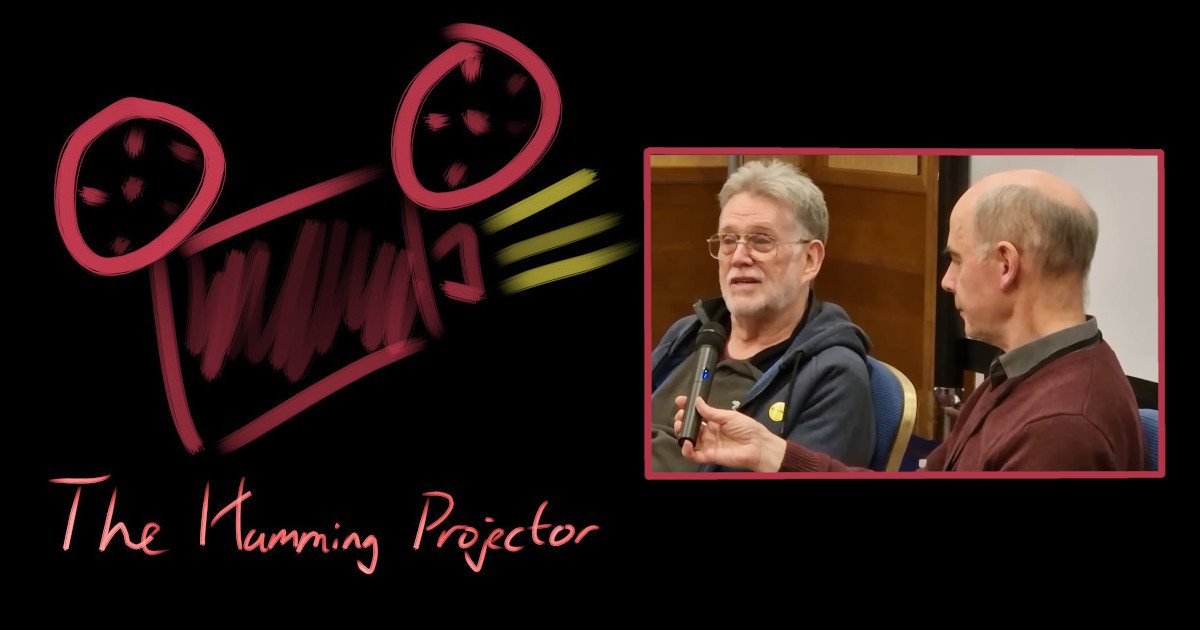
At the Blackpool Film Collectors’ Convention in November 2022, Ged Jones, a former director at Derann, had a Q&A session lead by Adrian Winchester. In this special episode we are happy to provide the audio recording of the entire session. A huge thank you to Ged and Adrian for letting us publish this here on this podcast!
Highlights of this episode:
- How Ged got the job at Derann
- The rental business at Derann
- How deals were made
- Ged doing editing
- The Disney deal
- A projector damaging the rental films
- Ged becoming a director
- What happened to the negatives after Derann closed the doors?
- The difficult years after the arrival of VHS
Links:
- The video posted by Super8database from the convention: https://www.youtube.com/watch?v=Fqtvz-IQ_0U (you can see parts of the Q&A session there too).
- https://blackpoolfilmconvention.co.uk/
- https://www.facebook.com/groups/1811529095633982
In this episode
-
 Eivind Mork
Host
-
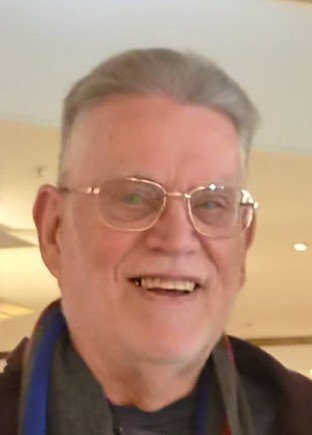 Ged Jones
Guest
-
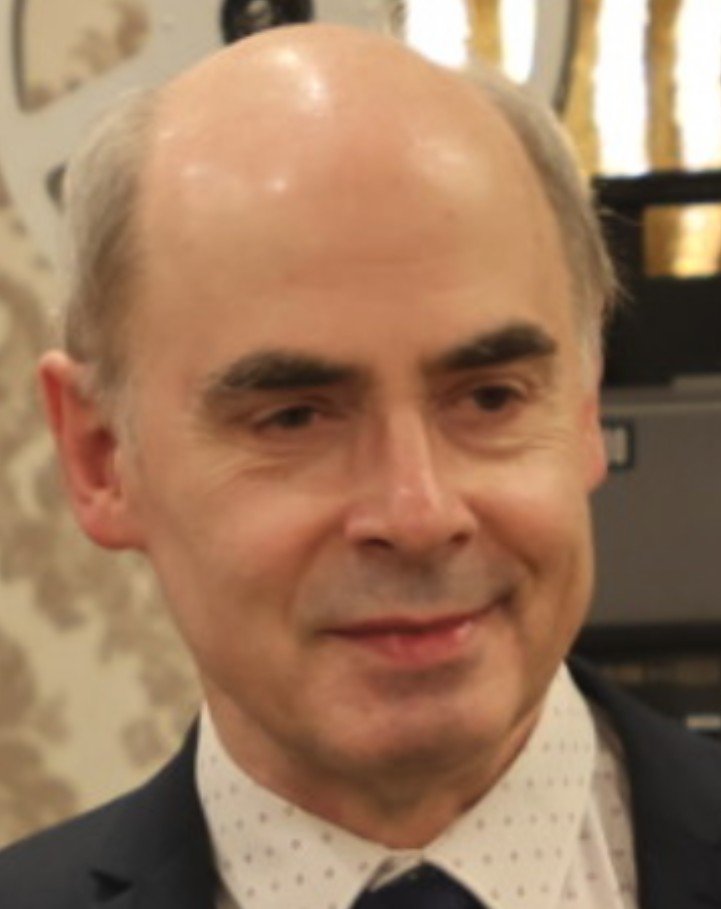 Adrian Winchester
Guest
Chapters
Transcript
welcome to another episode of the humming projector podcast today's episode is a special where we deviate a little bit from the regular setup at the blackpool film collectors convention at the Grand Hotel in Blackpool the 20th of November 2022. Jed Jones, a former director of Derann and also known for his Facebook group called Derann Vaults, had a Q&A session with Adrian Winchester. This Q&A was a very welcome addition to the regular program and I very much enjoyed being there. Parts of the Q&A session can be seen in the Super 8 Database video report from Blackpool, but I am very happy to release the entire session here in this podcast. Of course, I do this with a blessing from both Ged and Adrian, and also the other organizers, and I am very thankful for that. Well, good afternoon everyone. I am not going to welcome Ged to Blackpool because Ged was at the forefront of 23 Blackpool conventions, I think, and so he has far more experience than any of us, but I am delighted that he could join us on this occasion for a Q&A session. So, we've got about half an hour, what I am going to do is ask a few things to set the scene, but make sure there is plenty of time for you to ask the sort of questions that you may have. So, to start off with. Jen, I think it would be true to say that from a young age you have been a keen film enthusiast. That's very true, yes. Basically, I was an ABC minor and after seeing Gene Autry in Phantom Empire with the robots and Mauritania etc. That was it. I was captured. But I went to be a chef. But it was being a chef that I was able to meet Derek because he used to park his car on the car park and then zoom off somewhere. I never came into the bloody hotel. I used to zoom off. And then I was looking through this catalogue I'd sent for. A hire catalogue, Durand Film Services. And they were only around the corner but they wouldn't supply them to me because the hotel address was not permanent so they wouldn't hire to, eh? But there in this hire catalogue was a picture of this man I used to see climbing out of his car and walking away every Tuesday night. Because I used to smoke then, you see. So I used to nip out for a cigarette. So the next time I saw him, I went to him and said, "I know you are!" And we got talking and after six months I was offered the job there. But I used to go up in my chef's clothes, rewinding the films in the 16mm library. So when was that then that Derick offered you a job? Probably 19... I left the hotel in July 1975 and started Derann the following week. And I was there ever since. And was the fact that Derann had an involvement in the film world, was that a factor in you wanting to join them? I was mesmerised. I was mesmerised by the whole thing. Him, the shop. And it wasn't a big shop. It was just a small, sweet shop. As I say, I used to go up in my chef's clothes. Minus the act. And I used to rewind the films. That's how I got to know about film.
I used to knock up catalogues. I used to have a catalogue room and all the pages were there. And I used to do in the higher catalogues and things like that. And then he invited me. Him and Johnny. Do you remember Johnny Thompson our electrician? Johnny didn't actually work for the firm then, but Derann used to do a series of film shows at working men's clubs in the Midlands. And he invited me along one night and said, "Would you like to come along to one of the film shows we're going to do?" I mean, I knew what 16mm was by that time, but I didn't know they were going to use two projectors and do a changeover. I mean, for me, it was all such a wonderful experience first time. And they were showing, believe it or not, they were showing Christopher Lee in Dracula. That was the first show I ever saw them do together. And, well, then I just used to go to as many of those as I could always get along to. I mean, it did depend on what I was doing at work. I mean, if there was a wedding party for 250, or the Masonic were there. I mean, we used to have a Masonic lodge appear. You know, I couldn't always go along. And then one day he said to me, "Would you like to come down with me to London?" I'm going down to London to do some visiting various film places in Wardour Street. So I managed to wangle a day off work. And started my film. I mean, that first time in London was like a magic show. I think I was a bit surprised at how decrepit some of the offices were. I mean, you see these films and you think they're all going to be moguls. But you go into somebody like Eagle Films and they'd have an office the size of most of our toilets. You know, a small, and they'd be 16mm rusted cans piled up against the wall and paperwork everywhere. But it was still a tremendous thing for me. And I got back probably 9 o'clock at night, went back to work as a chef. And then, three months later, he said, "Well, you wouldn't like to work at Derann, would you?" That's it. He really didn't think I was that. I don't think I was that interested. I don't think I was expecting the offer. But it was film and that was it. Just the chance to work with movies. Not film. I don't think it was the film that attracted me. It was the very fact it was just going to be movies. And that's really how it all started. So at that time, around the mid-70s, the higher library was still going. It was the biggest, biggest part of the company. I mean, Derann had got a fair amount of stuff available for sale, but the quality, well we can't be, let's not nudge about it, it wasn't particularly brilliant. But the library was probably one of the largest of its kind in the Midlands at least, I don't know about the rest of the country. And that brought in the money. I mean, it was mail order. We did used to have people call into the shop, but it was 99% mail order. We had two people just doing the mail order and at Christmas we all had to chuck in and help tie up the parcels and get them out in the packages. But there was very little sales, except if Disney bought out a new One Reeler, then the telephone would go well for a fortnight while everybody was buying the latest Mowgli, the Jungle Boy. But generally it wasn't sales, it was the library that built the market. But I suppose, by the end of the 1970s, there were quite a few Duran releases coming onto the market. And so, did Derek see Duran as a company that could be achieving the same sort of status as Walton, perhaps? It's a very good question. I don't think Derek ever thought of Duran as being anything more than a business. that he wanted to... he wanted it to expand, but I don't think he ever thought he would get to where we eventually got. I mean, our first... the first deal that I can remember ever having happened there was the rank deal. That was the first thing that we... I mean, I'm surprised he'd never been to them before. I mean, I'm sure there were other rank titles already available via Walton and possibly Pell Films, I don't know. In fact, I know nothing about Pell Films. It's awful really. I mean, other than remember him as being somebody who liked the odd drink. I know nothing really about Tony. I don't even remember meeting them. I mean, Ralph Gill, I can see his face, but I can't see Tony at all. Moving on a little bit to the start of the 80s, there was a period when Derann suspended new releases. I wondered, would you say Derann got very close to completely pulling out in the same way that other companies did? I think that Derick assumed that video would kill it. I think Rick, you know, VHS and Betamax were fighting to see who could get supremacy. It was a market that we entered solely because it was the only way we could see forward. We didn't... Those years are hopefully erased from my memory. I hated the years in the video market. But I think Derek sincerely believed that the Super 8 market would end. He really did. I can remember doing the one at the... What was the hotel one? In Kensington. We won the award that year for the best extract for Robbie Nord and that. The Rembrandt. The Rembrandt, thank you. And... Everybody was talking about the video. I couldn't remember. All the people were coming forward and they were all buying, talking about their new VHS and Betamax machine. And it was horrible to hear because they had got all these stuff on the table from UA. But there was not a lot of interest. All they were talking about was the full-end video they were buying in the full-end. And I really think that we thought that was going to be the end of it. Yeah, no, I don't think Derek thought we would get past that stage. Well, that raises the question then. What was it that caused Derek to have that amazing vision to see that at a time when less and less 8mm was coming onto the market that maybe Duran could spearhead a revival and become world leaders? No, that's a tricky one. Even I really don't know. Do you think he saw it as a risk that was worth a try? Well, he just loved film, so possibly yes. And it was quite by accident that he was able to pick up the ITC titles that we did, which really started it all up again because the ITC was such an innovation really, full-end features with such nice quality. But it was just an accident. I mean, if he hadn't gone for a pee, pardon me, at the time he did, he wouldn't have met Lou Grade and that would never have happened. But they just happened to be washing their hands next to each other in the sink and that conversation came in. I mean, I don't know whether Derek, he never really said to me whether or not he'd seen Lou next to him and recognised him and sprung on him and said would be interested or with him. I've no idea how it came. All I know is that when he came back to the stand he says, "I've just been for a..." And I've just met Lou Gray and he said, "We can have Raise the Titanic and pick some other titles." And that was it. It changed everything. Well, you mentioned visiting film offices that looked a bit dishevelled and I know that cinema attendances did reach a low point in the early 80s and so the British film industry had declined seriously. Do you think perhaps some of these companies saw 8mm as an opportunity to get a bit of extra income? Some of them, yes. Some of the lesser ones. But Enterprise Pictures, I mean, they just thought they were... Everything we had off Enterprise Pictures was worth ten times the amount that we wanted to pay. But Enterprise had a nice office. It was probably one of the smartest offices we ever went into that wasn't a major. But generally, they were pocket money. In fact, I think this is what put a lot of people off bothering because raising all that paperwork just to get in £200 and they didn't think it was worthwhile. So most of them just refused point blank because of that. It just wasn't worth their time. People like Michael Myers at Miracle Films, he was willing to do anything for a quid. It did depend on the company in question. Well, I suppose it was the ITC deal that led to Raise the Titanic, which was the ground-breaking launch of a film in full-length 600 foot or initially 2x400 and trailers, which clearly indicated there was a market. So, that caused the extraordinary 1980's revival that Derann were very much at the forefront of. And so, I'm sure most of you are familiar with what that led to, but it's probably a good time now to invite your questions. So, who would like to start on? Mark? Jed, what was the biggest ever Super 8 in the Nyssa Rental title? Was it one of the Amorous Vickers or something like that? No. Erm... I would think the Elvis Presleys, believe it or not, the Presleys. And Scars of Dracula. That was another great deal, wasn't it? How did you get the Hal Roach deal? That was amazing. The Hal Roach deal. The Hal Wallis? Yeah, with all the Elvis titles. They were being re-released theatrically by Grand National Films, who were really better known for their... Very minor. Yeah. I mean, Derick had been dealing with Morris. That was Morris Wilson. He was a lovely old man. I only ever met him once, unfortunately. He passed away shortly after I met him. No, don't blame me.
But, generally, he dealt with cheap horrors from Spain and Night of the Bloody Apes and things like that. Night of the Bloody Apes and things like that. But he wasn't really... But he was doing this re-release package of Al Wallace. What, there was six Elvis and the last train from Gun Hill. And he, he looked at him as his son. Maurice, really, he used to welcome him in just like as if he was his dad. They'd got to know each other years before I joined the company. And he said, "You've got to have these, you've got to have these, my son." And that's how Derek told me that. He said, "My son." Elvis, you know, was such a minor company, you think MGM or... Yeah, no. I can remember seeing the two Elvis's, but we never issued them all. Funning Acapulco, for some reason, wasn't on the contract that we did. It was just the others. But they used to... They sold extremely, and hired extremely well. Even though the quality was so so... GLA greens, wasn't it? No, greener way it was called. As opposed to blues. No, the colour was very iffy. Now, I think there was another question, the gentleman here. How are we doing? Nice to see you again. Me and my friend Tony Meadows over there, our good friend Terry, used to hire Deran Library Films. I always remember one summer's day, in a hottest July in '76, I had the erotic adventures of Zorro. And the projector burned out, the bells just got steaming. That was one of Grand Nationals. Well, it was a good hire. It didn't sell particularly well, but it did hire well. And the other side of it, I must remember you going to er, did you go to New York with Eric to get the United Artists deal? No, no, we got that in London. We went to, we did a lot of trips to the States. Ivy Films we visited in New York, that was the Captain Marvel stuff. In fact, he'd more or less completed that deal, over the telephone I think he'd dealt with somebody called Sidney Tager. But I think it had all been done on the phone. But Sidney did visit the shop later on, because he wanted us to do a second deal with him for another batch of films. But the prices suddenly doubled. And the only, I think we put out Radar Men from the Moon, but we didn't, I think there were other titles, feature films. But Derek never went ahead with them because the prices just tripled, so he wouldn't do anything with him again. In fact his son, Sidney died, and his son actually contacted us and asked whether we were willing to do anything with him. I think he was finding it difficult to sell the films he got by then. But we never did another deal with Sidney. Wasn't the, er, when Derann had the Felden Library rental, there were certain projectors you wouldn't, if they had that made, you wouldn't... Shin-on? Well it wasn't all Shin-ons, it was a specific model. Yeah. And then we did, it was not, it was one of the things that when you've joined on the form, you used to have to put your projector and the model number. And it was noticeable that the one, that we were getting a lot of damage back and then somebody realised that that damage always occurred on a specific... ...Synerect, known as Synerect, Shin-on. Yeah. I don't know which model, so we stopped it. We wouldn't allow it. But we had a letter from Dixon's, because it was a part of Dixon's. And they were really irate about it. I remember Derek coming downstairs and saying I've had this letter off Dixon's. But he explained two of them and eventually they discontinued the model altogether. Yeah, I remember that. I wrote a letter saying have you got this model of projector? I said no, thank you. Well originally they did say they would exchange the projector for another model. I don't know whether they actually went through with that. I mean, I don't know. But it's the only time that it's ever happened. I mean, let's be honest, all projectors can cause damage if they're not properly looked after. But I'm afraid this machine just wasn't built to show films. Anyone else got a question? When and where did you meet the late Tony Hutchinson? Do you have any particular memories of him? Oh, Tony. He's always there, wasn't he? He even had a stall at an Open Day. He used to come to a lot of Open Days. Well, we were trying to revamp the Open Days because, like everything, everything began to... ...stumble towards the end. And Tony was always a good lad. He refused to bring film. He wouldn't bring film and jeopardise our sales. He only ever bought magazines, books. He would not jeopardise our sales. He was a really good lad. But as for the first time, he just always seemed to be there. But I've got no specific recollection of... when I would have first met him. Probably one of the London conventions, I would have thought. I don't know. I missed only. Who else would like to ask something? Did you do any of the editing of the countdowns yourself, Ged? In the early days I was given a few to do. The first thing I was ever given to do was a short. I can't remember the bloody title. It was an aeroplane thing, Phantom Pilot. And it was a 20 minute short and I had to knock it down to 8 minutes. That wasn't easy, that wasn't hard to do. I mean, it was a plane film. I mean, what can you do with a plane film? And then he asked me to do, he gave me one of the rank titles to do The History of Mr. Polly. And a submarine film with John Mills. And I don't know whether it was We Dive at Dawn or... Above Us the Waves? Above Us the Waves. It was one of those two. And all he said to me was, "Try and get rid of the first 20 minutes, you'll find it easier after that," he said. And it was. Mr. Polly, I've got a feeling that Mr. Polly had some narration. And that helped tremendously, because I could use him in that to sort of bind things together. Those are the only two features I remember doing for us. But I remember him giving me 16mm prints. And afterwards I found out they weren't edited for me, they would have been done for mounting. Robert Mitchum film. Where he was erm... The Lusty Men. Is that erm... Is the Lusty Men with Orses? Yeah, it was that. And then I found afterwards he wasn't for us, he was for mounting films. Erm... But the one I enjoyed doing most was a little teeny short for the Boris Karla film The Sorcerers. Because although he'd never told me, I thought about, you know, he's utilised, they take over the mind of a little... A little... Ian Ogilvy. Ian Ogilvy. Ian Ogilvy. But I utilised some of the words from another part of the film over the top of something that was happening. So I did explain. Right. And he thought he... He'd never explained I could do that, but I just thought that would be nice. So we did that on a dual band... What? A dual... I can't remember... And what's the name of the dual band machine where you can play a film on the one and you've got... That's... Elf? Oh no, man. Fancy name. It was not Steinbeck, was it? I... That's what I wanted done and Derek was able to do it. But that's all... I mean, other than that, Derek would do most. And sometimes we'd sit together like I can remember doing 42nd Street on the kitchen table at his house. Because we were still using, didn't it? Most of that first contract was done from 16mm prints for UA, but the prints that they supplied a bit far superior prints to what you've been able to get off people like Grand National and that. So the quality, although with 16mm, I mean 42nd Street and Gold Diggers, I mean they were really nice quality. I don't think people realised it would actually come off 16mm. But then it was the second contract and we were putting out, what is it? Mag 7 and the Great Escape and of course we were using Scope and you just need that extra to start with. So we came off 35mm and of course once we'd done that we never really went back. We stuck to 16mm, 35mm and then of course later on Disney were only too pleased to print reduction 16mm. So we had a lot of negatives of Technicolor. But every negative we had for those Disney films used to knock us back about $6,000. Just for one title. And they used to say, I mean we all know the story of Little Mermaid. When that was first put out we were never happy with the quality. But because it had been printed by Technicolor in New York, Disney were convinced that it was the best they could produce. But eventually they relented and did say we could have a new negative. But they wanted us to relaunch it and sell prints all over again. And people weren't going to buy a second print of a feature film for $275,000. So we never reissued it. But the quality after that was fine. I mean, then came the rescuers down under, which was 30 times better than Little Mermaid. And we really never looked back after that. But once we got the Disney deal... Isn't your arm getting tired? Don't worry. Once we got the Disney deal, it was... I mean, we'd already started with some of the Ken deals. And I've worked on a new series of posts on my site for Derann Vaults. If you don't know about Facebook, I've got a site on there called Derann Vaults. And that's my big push for the day. The MGM stuff has always been assumed that we dealt with Ken. But really what happened was that MGM actually contacted Bob Lane of Ken Films to offer him the rights to issue features. But Bob had actually decided that he'd had enough of the 8mm game and he wanted to get out of it. So he spoke to MGM and told them that he had somebody that he thought could handle the deal better than him at that time. And MGM relented and said okay go ahead. So we picked up the MGM deal that Ken Films had been offered. So, the first five titles, MGM and St Louis, Gone with the Wind, what, Three Musketeers with June Kelly, whatever. They, we knew those titles were going to be issued but after that really there was nothing that we couldn't have issued unless there was a problem with Master Material, which was our biggest problem generally was Master Material. I mean, Fox were only, once they found out that we were having stuff off MGM, Fox were only too happy to let us release anything that they'd got. But it was the same thing, I mean, we were looking at things like Cleopatra and the Cassiperscope. But they just said, "No, I'm sorry, we just haven't got a reasonable, without you striking brand new material from the word scratch." So it was just too, far too expensive. And because we'd had so much sex with The Sound of Music, what was Carousel, King and I, obviously we'd never got Oklahoma and my favourite South Pacific, solely because they were still owned by the Hammerstein Estate and they were talking telephone numbers, they were. But we wanted to put out like, we thought State Fair might be a good thing, but that wasn't, the quality of that they said just wasn't good enough. So there was lots of stuff that we tried, but Rank were the same. I mean Rank was wonderful, they just said if we've got a negative you can put it out. And of course, because Rank had issued stuff from Orion, which is why we were able to get Silence of the Lambs and the RoboCop platoon. All came through because of the fact that Frank just said if we've got a negative, use it. Well I remember Derrick announcing that and I think he was quite surprised that they said yes, wasn't he? Yeah, well I think we were all, I mean, you've got to think that most of these deals by now, we didn't even have to go to the offices. They knew us so well that most of those deals were done on the phone. It was all phone. I mean, we never signed a contract. I sort of did an open contract and Peter at the labs used to say, "Oh, I've just found a negative on such and such here. Would you think you could put that out?" And we'd say, "Run us off a print." And if the print was good enough as a test print, we used to say, "Yeah." And then he used to phone up rank and say, "Add this to their contract." And basically we got this open contract and they just used to write the new title in. There was never any signatures. But I mean, we had some right crap really. I mean, All Coppers Are and some of the Doctor's films, which, I mean, it's a terrible film to start with, All Coppers Are, but we might have sold three copies. But we didn't have to pay anything upfront, no negative costs. So it didn't really matter. I mean, there must have been, I mean, I think there was nobody more surprised than me when we got Silence of the Lambs and it was like only two years old. I mean, who'd have thought that? And considering that it's not the sort of film that you want to watch more than once, well, in my opinion, it's a great film, but once you've seen it, people were buying it for some reason. I don't know why. Disney's I can understand. I mean, we've all got our favourites. Yeah, maybe you'd watch it 10 years or 15 years later. Would the colour still be there? I mean, that's another... With the low-fade business, I mean, I get hundreds of people on to the group asking me about... They contact me in private and they say, "There's a copy of such and such for sale on eBay. Would it be printed on low-fade stock?" To me, I was just working there and recording, and we get a lot of people talk about, "Is the printer Revenge of the Vampire?" The old, the Barbara Steel one, the black and white one. Has he got the cuts in? But at the time, you know, you were just at Grand National, and you put out the version that they issued at the cinema. So it wouldn't have been uncut. It would have definitely had censor cuts. I don't remember. It's something you wouldn't have said to Grand National, "Do you think we could have the uncut version?"
Any more questions? We haven't got long. So, Peter? I always assumed the one real cartoon must have been very big sellers called their repeatability. Which, are you talking about the Disney? Well, no, any of the Tom and Jerry's, any of them. There's the tech savings. There were any particular ones that would fly off the shelf. All of the early Tom and Jerry's would go. They began to lose their sellability. I think there were so many of them. I think we issued a loan over 80 titles. So I think that it got to the stage where people thought to themselves, "I've already got 30 of these. I'll skip it this time." But the Walt Disney ones, because there was such an array of... All right, you've got your classic cartoon favourites, you know, your Mickey Mouse and your Goofies and that. There was also a selection of other, you know, the wonderful... Woodland Café, all that sort of thing. So you've got such a choice of those things and then later on we did the few Scope ones as well. And they continue to sell. Some sold continually.
There's only one type that, gosh, we couldn't print them fast enough.
I can't think of one that sort of, gosh... I mean I used to sound most of these, but...
In the end you don't even look at titles.
They just lace the machine up and you just stand there all day doing them. Mickey Mouse was probably the most popular character, even though I used to find him personally a bit infuriating. He wasn't very funny, was he? I used to like Goofy best. Do you remember the JC News Theatre off Piccadilly Circus? Yeah. We went in there once to kill an hour, Derek and I, and there was a... It's Goofy and he was learning to ride a horse. I had tears in my eyes that day, I laughed that much.
But we never put it out unfortunately.
But the Tex Avery cartoons were, those are probably my favourites, the Tex Avery. One thing I'd like to ask quickly because it's a reflection of how significant your role in the company was. Am I right that other than Derek and Anne, you were the only Duran director? And when did that come about? It came about because Anne went on holiday one year, well, Anne and Derek went on holiday one year, and Anne had inadvertently forgot to send some cheques. And we had some very irate telephone calls. So when they came back and they realised what had happened, they thought, well we need somebody else who can sign a cheque. And I was made a director solely, so I could sign a cheque, should it need be. I wasn't a director in any active form of way, I was just a working director. I was never asked to go to any meetings or anything. I had a small increase in my wages because of that word "director" after my name, but that had caused me trouble at the tax offices. They wanted to know what car I was driving, what company, and I don't even drive! LAUGHTER But they wanted to know, you know, they assumed that because I was a director, I'd got all these extras. LAUGHTER But that, it happened about 1981. I think we'll have to wrap up very soon, but would someone like to ask a last question perhaps? Just a quick one. How did the Bond, how did you get the Bond film, Goldfinger? That's a good question. A good question because I don't, I've thought about this myself. Did we get it from United Artists or by that time had it gone over to MGM? So I don't know whether it came through the MGM deal or whether or not it was one of the last things we may have picked up from United, and I don't know the answer. Oh, that's interesting. Because it wasn't part of the original U.A. deal. No, no. It came in a bit later on, which makes me suspect, if anything, it was one of the MGM packages. Because that was a really weird time. We were getting titles in that I don't associate with MGM, but of course, MGM picked up all the U.A. stuff, didn't they? And I'm assuming it came in through the MGM deal.
We've got one last one here. Yeah, whatever happened to all the films when DRAM went? When you say film, are you talking about the negatives, the Soundmasters? No, all the stock, it was like... You mean the prints? Yeah, the actual stock that people could buy. Well, when we closed the shop on the Sunday night, after the last open day, there was a certain amount of - there was a lot of 16mm left. And there was about six crates of one reelers, and there were features, but it wasn't a vast quantity. And I've no idea what happened. I think that Adrian sold them to... I think there was a chap called Martin Knowles, who used to work for Derann, in the hi-fi section. And I've got a feeling that he did a deal with Martin who would probably sell them on eBay, but I don't know. Well, I think we have to draw this to a close now, but we've learnt some fascinating things, and it's remarkable what we haven't gone into. And so I think there's scope to extend this on another occasion, should Ged be willing to come back. But anyway... I'm surprised nobody asked what happened to the negatives. All those wonderful negatives. Because you know the labs closed down in this country, which was one of the things that caused us the big, big problem, is how do we carry on? But all those negatives, all the Disney negatives, the Fox, the MGM, were all returned to us from the labs. And so upstairs in our cinema, the one side was continually closed off because there, and all these cans, was every negative to every film we'd ever issued. Even substandard eights. And they were all thrown into skips. Thousands and thousands and thousands of pounds worth of skips. Well at least you didn't have a problem with the rank ones because they never left rank, did they? No. No, but that wasn't considering what was there. But we did get a request from Phil and asked whether or not we would be able to sell him some negs and soundmasters. But we were very concerned about the fact that if suddenly Disney said where are our negatives, because normally when you sign for a contract, there's no swappability, you can't pass them on to another company. And he was very concerned that Disney might take things a lot further, so we said we can't. And they all went into skips. And soundmasters. Skip after skip after skip. Well, on that extremely sad note, we have to end now because it's time. I know. Do they know that Mrs. Simmons passed away? We did actually have a toast to Anne and Derek last night. I meant to start with that. It was a big shock for me. Does she only live around the corner?
Well, I'd like to sincerely thank Ged for coming along and participating in this session. And with luck, perhaps we can invite him back another time. So let's hear it for Ged. Thank you, Ged. Thank you, Ged.
The Humming Projector, Pandora and YouTube. You can also use any podcast player supporting RSS. Go to our website www.hummingprojector.com to learn how to subscribe. You can also listen to the current and previous episodes on our website without any additional software. If you have any feedback for this episode, or a suggestion for a future episode, please send an email to feedback@hummingprojector.com. Again, a huge thank you to Ged, Adrian and the other organizers at the Blackpool Film Collectors’ Convention for letting us publish the entire session in this episode. If you haven't been at the Blackpool Film Collectors’ Convention, I highly recommend that you go there if you have the chance. The next event will be Friday the 24th to Sunday the 26th of November 2023 at the Grand Hotel. In episode 2 I talked to Simon McConway about the convention, and if you haven't already listened to that, you can learn about the convention there, and I will add a link in the show notes to last year's video I made for the Super 8 database. A link will also be made to the convention's brand new website made by John Armour. At this website you will find updated info about everything you need to know about the convention, like how to book at the Grand Hotel at a special rate, book a seat for the dinner, etc. A one-stop shop for everything you need to know about the convention. This page is looking really, really great, both at a desktop and a mobile phone. That's something I noticed as a programmer. And if you haven't already visited the page, I recommend that you go to blackpoolfilmconvention.co.uk. You will find a link to this in the show notes as well. I will also link to Ged's Facebook group, The Duran Waltz. Ged posts a lot of interesting stories and facts about Derann, and I highly recommend that you join the group if you haven't already done so. That is all for this episode, and in fact for a while, as we now will take a summer break. Plans are already being made for episodes after the summer break, but in the meantime, I wish you all a great summer. My name is Eivind Mark, and thanks for listening!